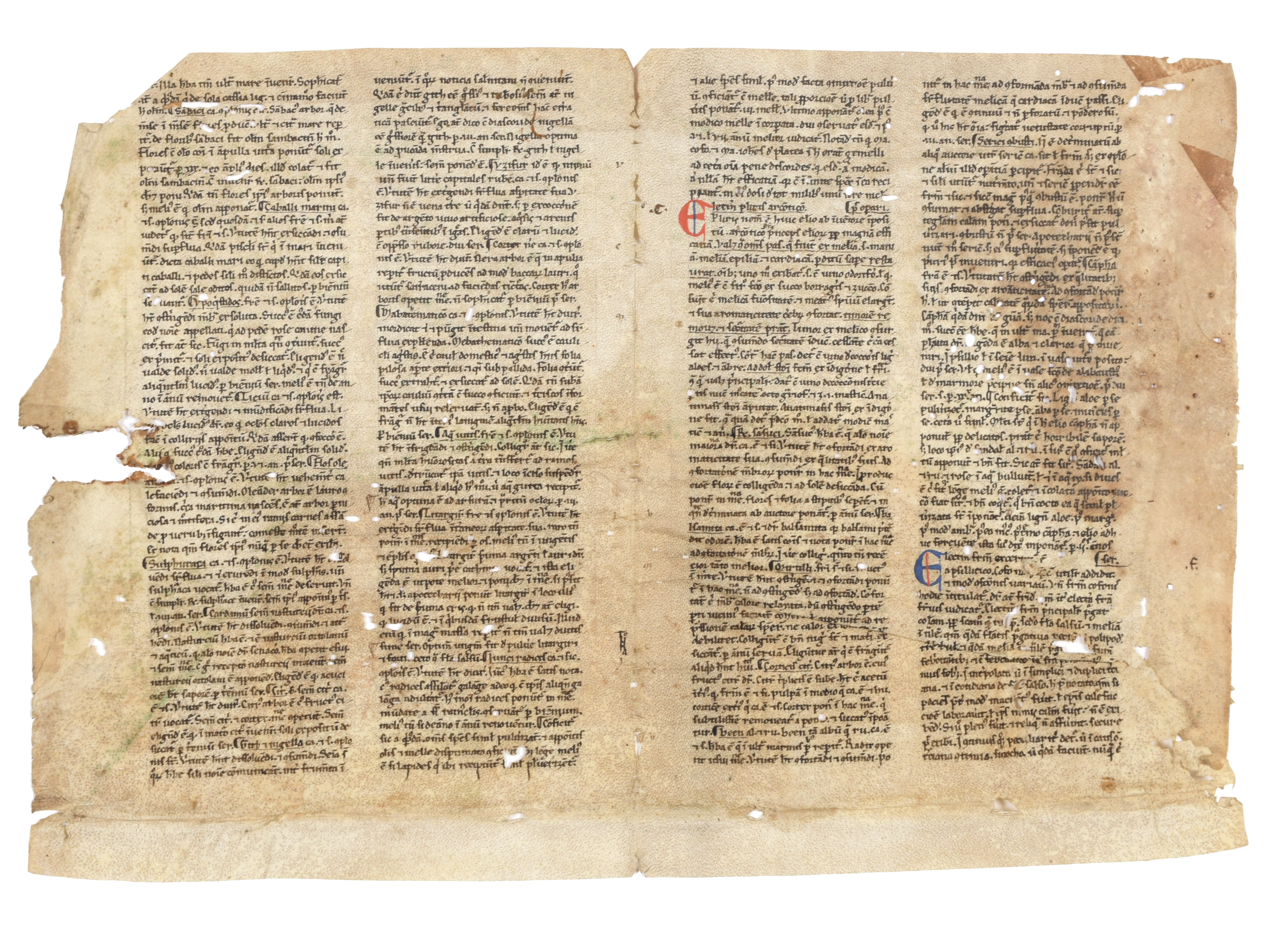
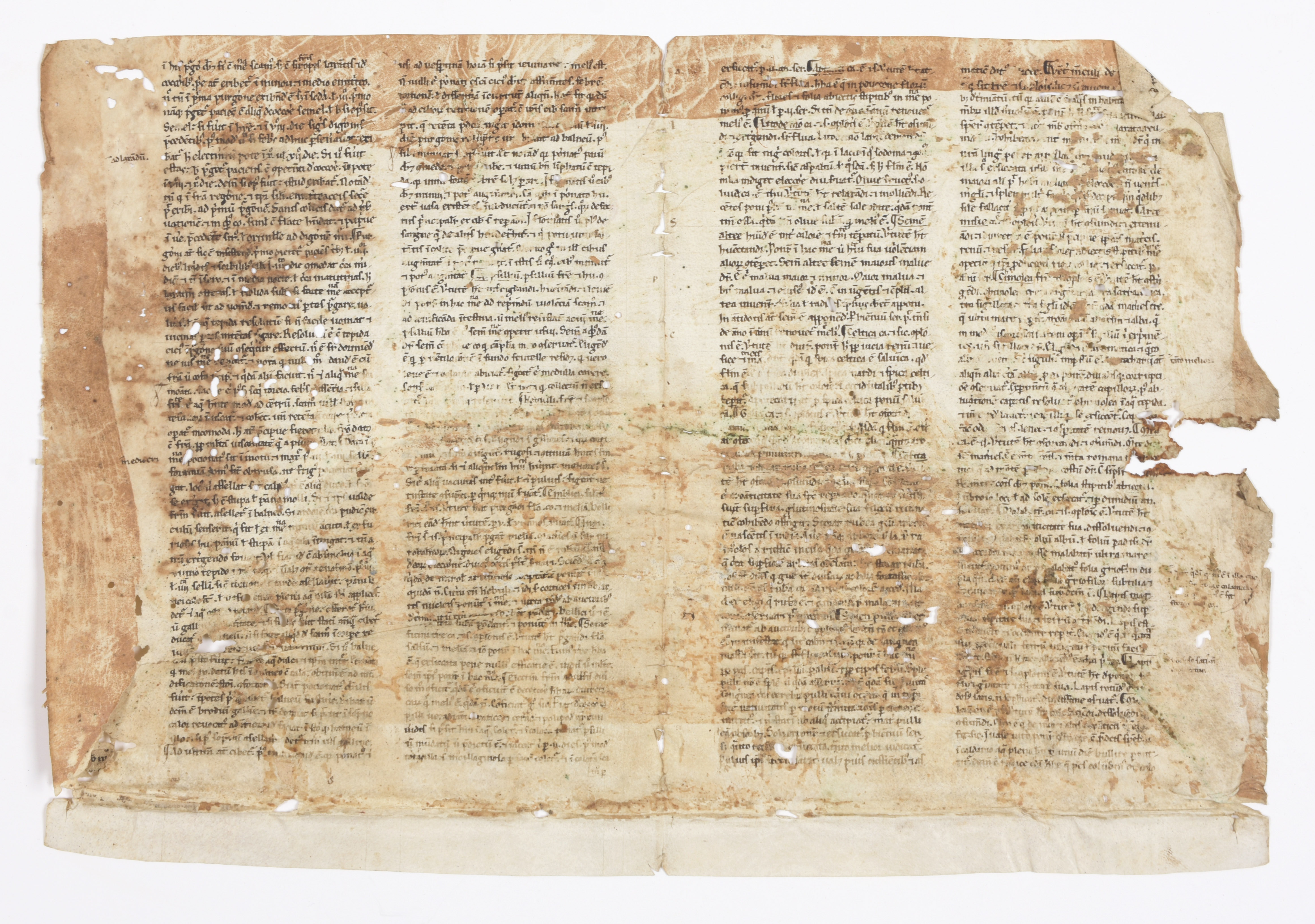
Two conjoined leaves, each with text in double columns of 51 lines of an angular university hand, names of plants and similar medicinal bases underlined, initials in red or blue with simple penwork in contrasting colours, damaged at edges, and with some scuffed areas of reverse making parts of that illegible, some stains, cockling and holes overall, fair condition, each leaf: 205 by 150mm
Italy, and in particular Salerno, was a crucially important centre for medical study in the European Middle Ages, and saw the production and copying of many European works as well as the translation of others from Hebrew, Greek and Arabic. Many such texts remain unedited and unstudied, or survive in numerous unstudied variant forms. That here discusses the effects of the fabled 'aqua vitae', cinnabar (""yzifur""), lead-oxide (""litargir""), the juice of the parasitic plant Cytinus hypocistis (""ypoquistidos""), the 'Gith', a plant of the nigella genus (""gith et nigella""), a plant of the emblica genus (""emblica""), a grass of the celtica genus (""celtica""), olives (""olive fructus""), the seeds of the marshmallow plant (""semen altee"") and a type of clay named Cimolian earth (""cimolea"") among others