IMPORTANT: Acceptez les cookies pour pouvoir enchérir !
Notre site web a besoin de cookies pour que le formulaire d'enchères fonctionne. Sans cookies, votre panier restera vide et vous ne pourrez pas enchérir. Cliquez sur « Accepter » pour activer les enchères et assurer le bon fonctionnement du site. Nous vous demandons votre consentement pour utiliser les cookies.

J'accepte l'utilisation des cookies Je n'accepte pas.
retour à l'aperçu

DIO CHRYSOSTOMUS

[De Troia non capta:] Ilii captivitatem non fuisse. Tr: Franciscus Philelphus. Ed: Nicolaus Lucarus
Cremona
Bernardinus de Misintis and Caesar Parmensis
1492, 22 July
€1.600 - €2.000

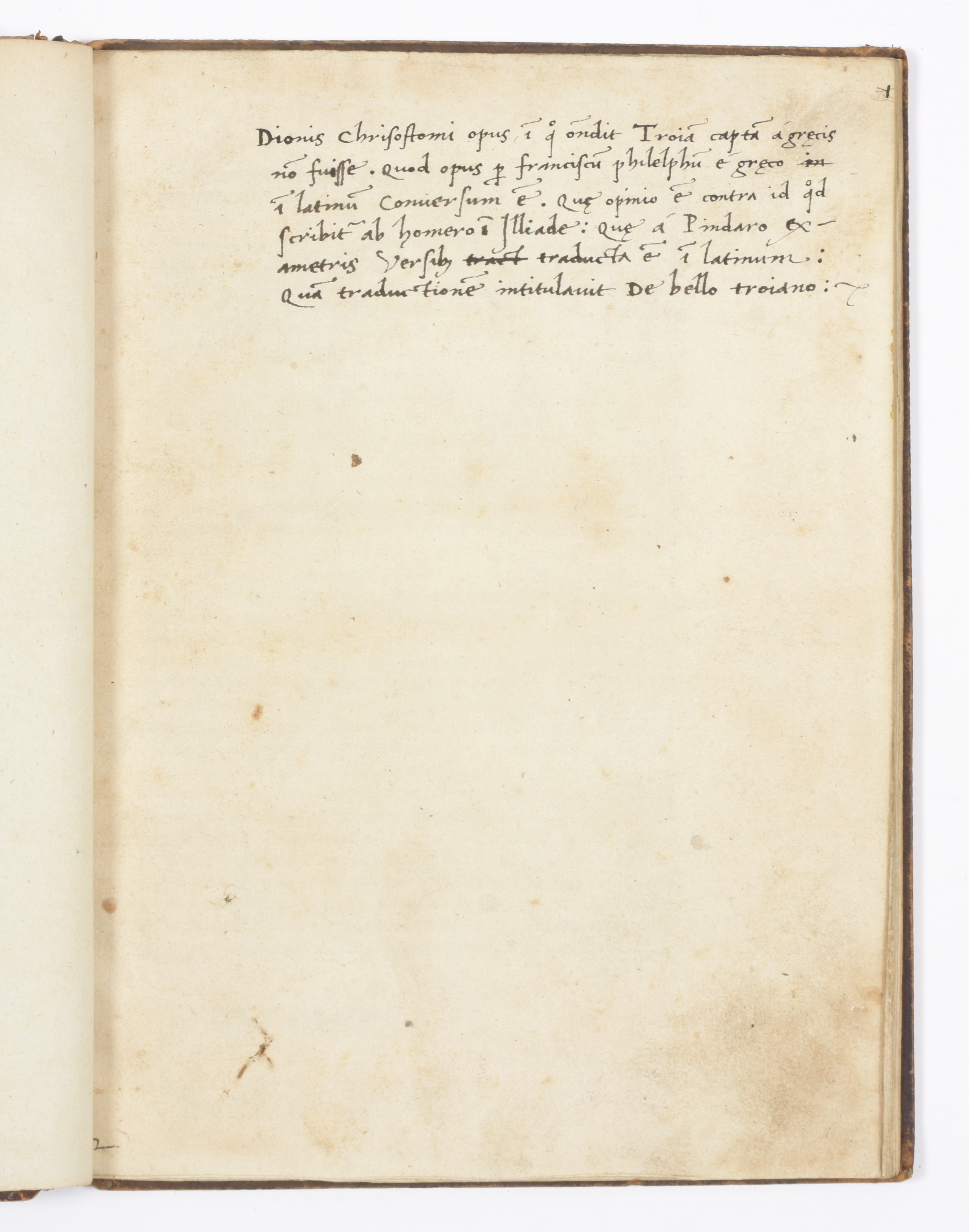
4to, [20] leaves, first blank, 36-38 lines, roman letter, woodcut initial at beginning, slightly damaged, hole in margin of a2 repaired, name in same margin obliterated, long contemporary note on the work in accomplished humanist hand on first blank leaf. Nineteenth century calf gilt, with Wodhull arms on upper cover, upper joint repaired

Provenance:
bound for Michael Woodhull (around 1802), with his arms on upper cover, sold by Sotheby's in 1886, booklabel of George Dunn (sold by Sotheby's in 1914), bookplate of John Arthur Brooke (sold in 1921), bookplate of Albert Ehrman (Broxbourne collection, sold by by Sotheby's in 1977: the property of John Ehrman).
Ref. Goff D206; HC 6184*; Pell 4262; BMC VII 956; GW 8370; Cocxk-Indestege, Classica et humanistica, in Gulden Passer (2003), nr. 54 (this copy) Scarce, no copies in Belgian libraries. Dio of Prusa, the greatest Greek orator of his time (first century AD), directly contradicts everything Homer tells us about the Trojan War. Like an accuser, he verbally attacks the great poet: the Trojan War as we know it is based on Homeric lies. The truth must now come to light: not the Greeks, but the Trojans won the war! Dio's entertaining, fiery argument therefore not only fits within centuries of Homer criticism, it is also an indictment of 'fake news': a current theme, transported back into the world of ancient literary criticism