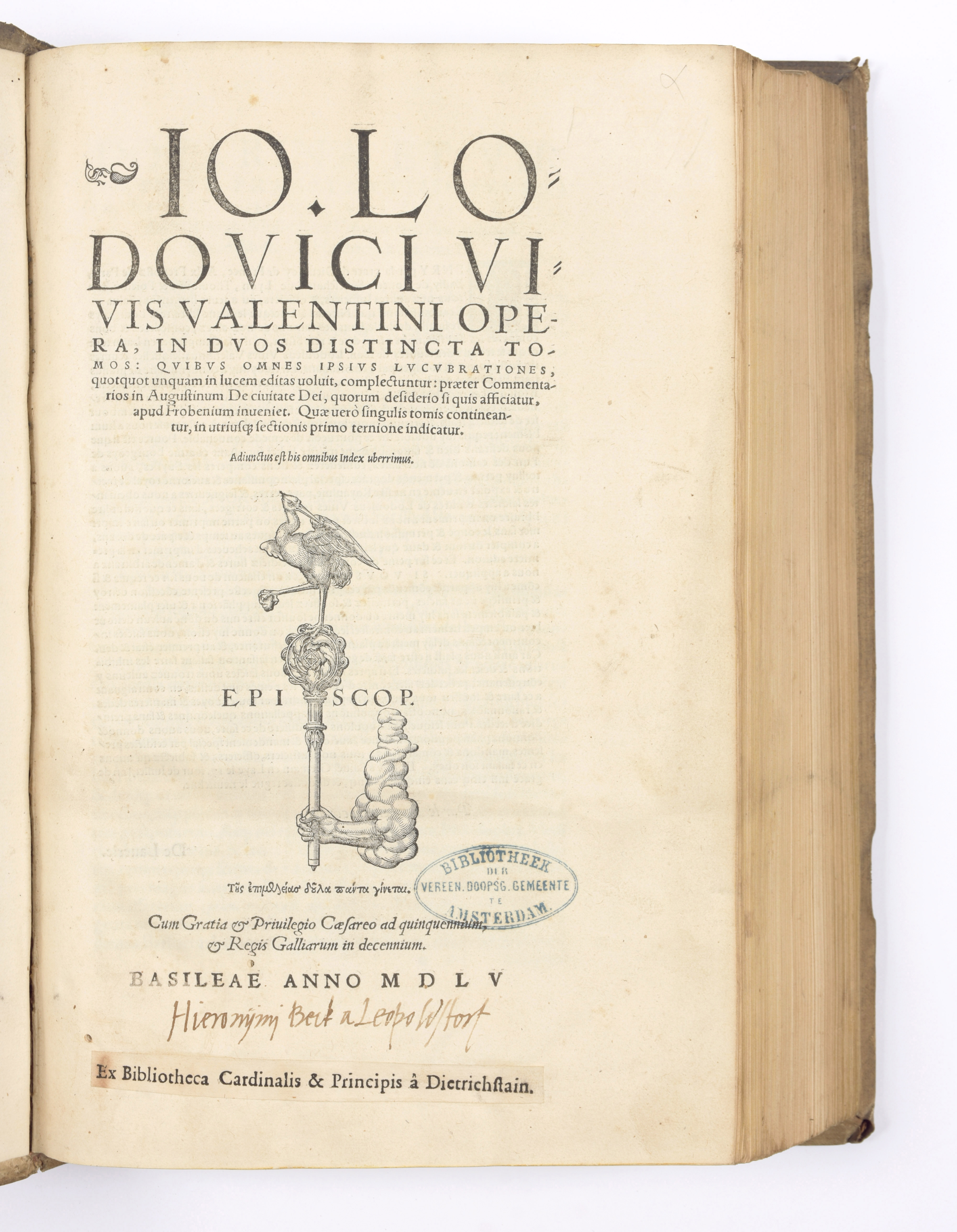
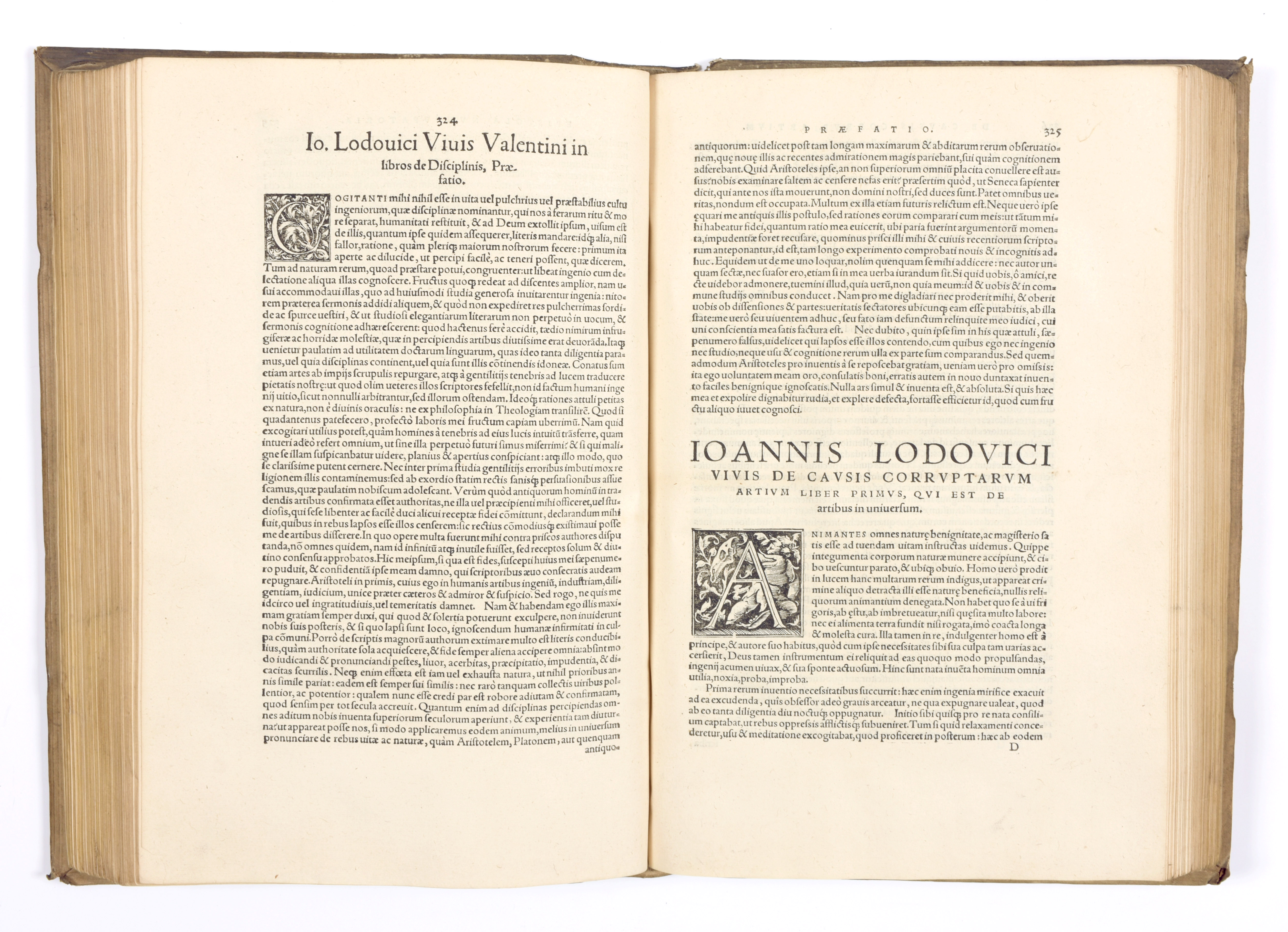
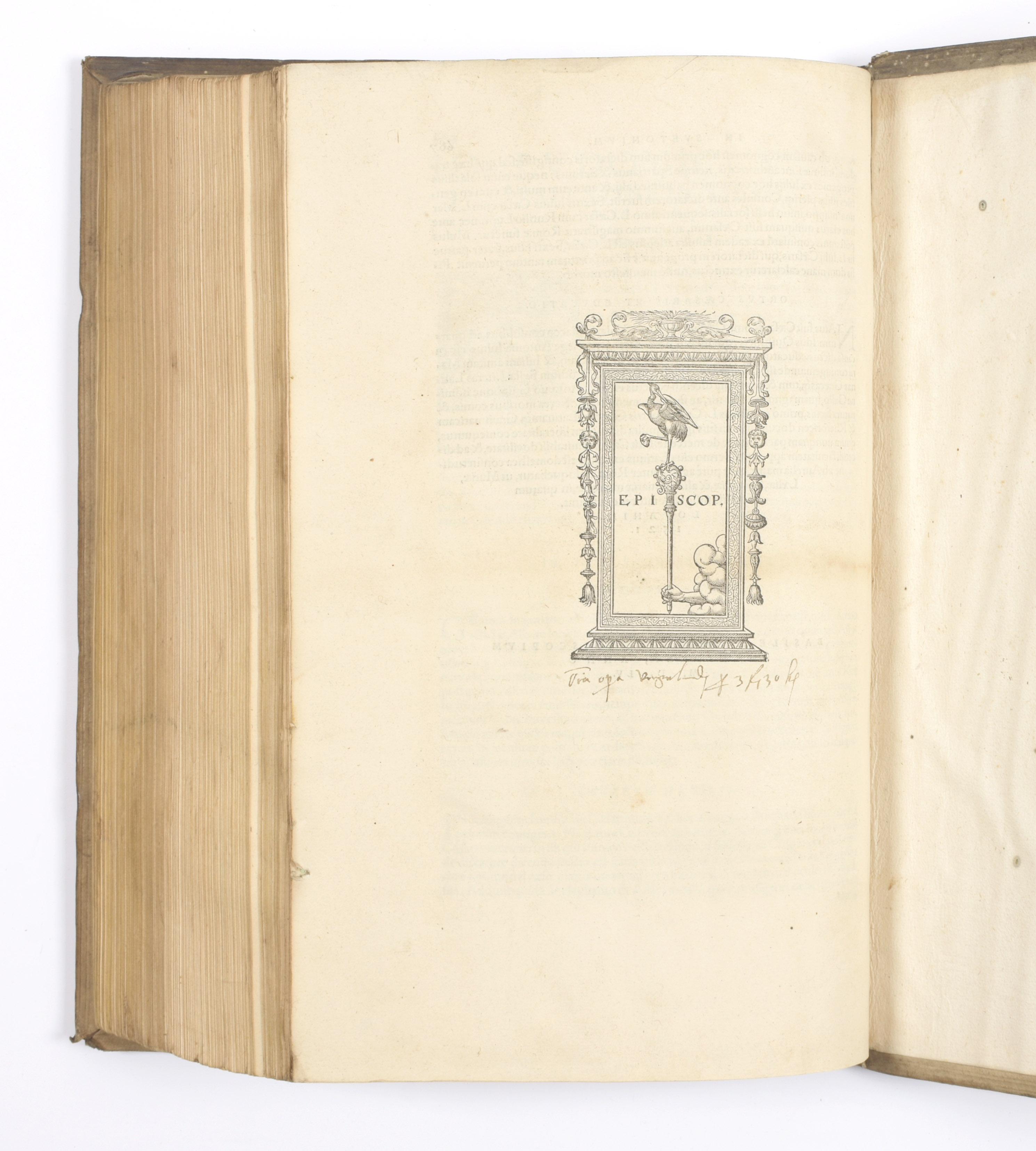
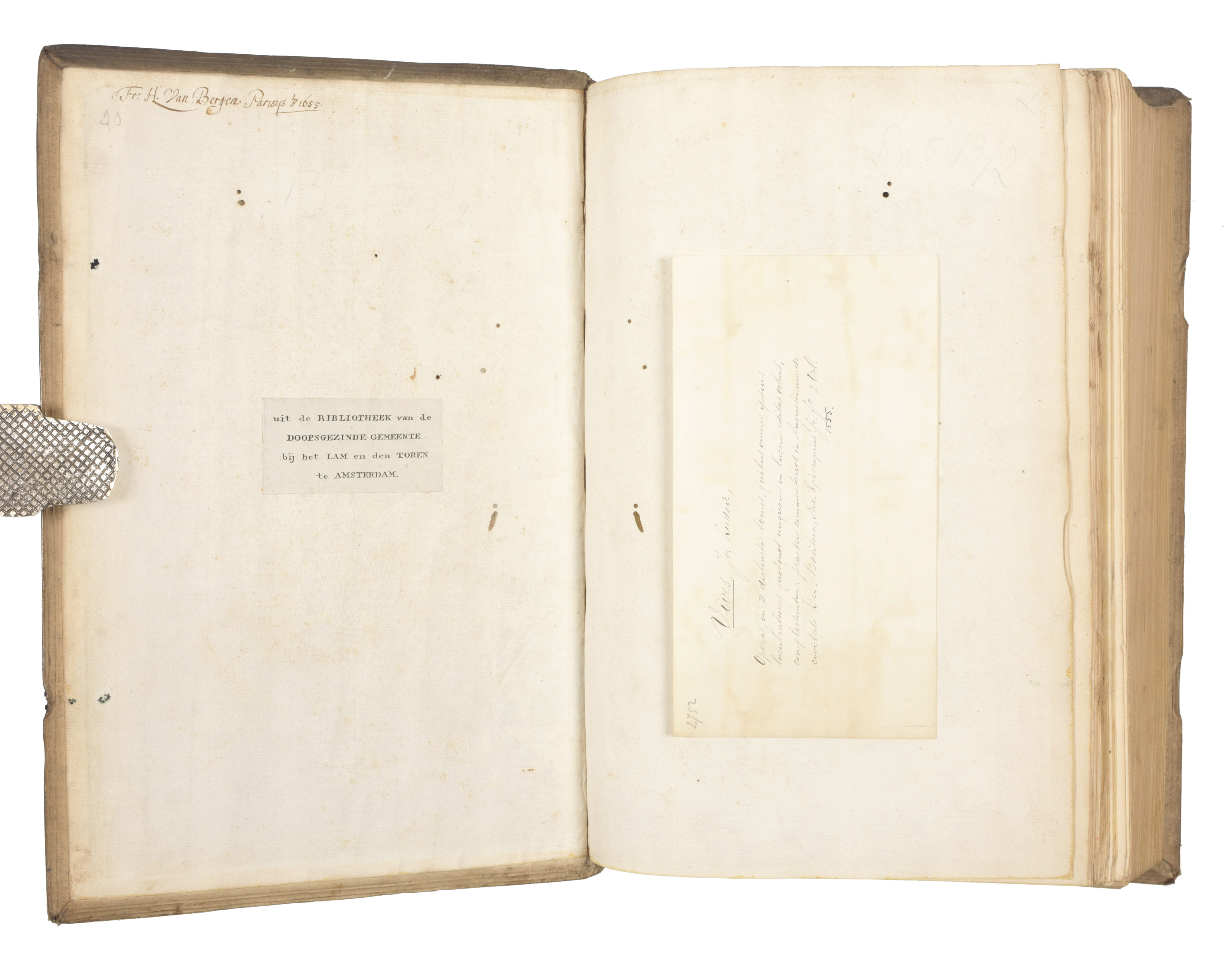
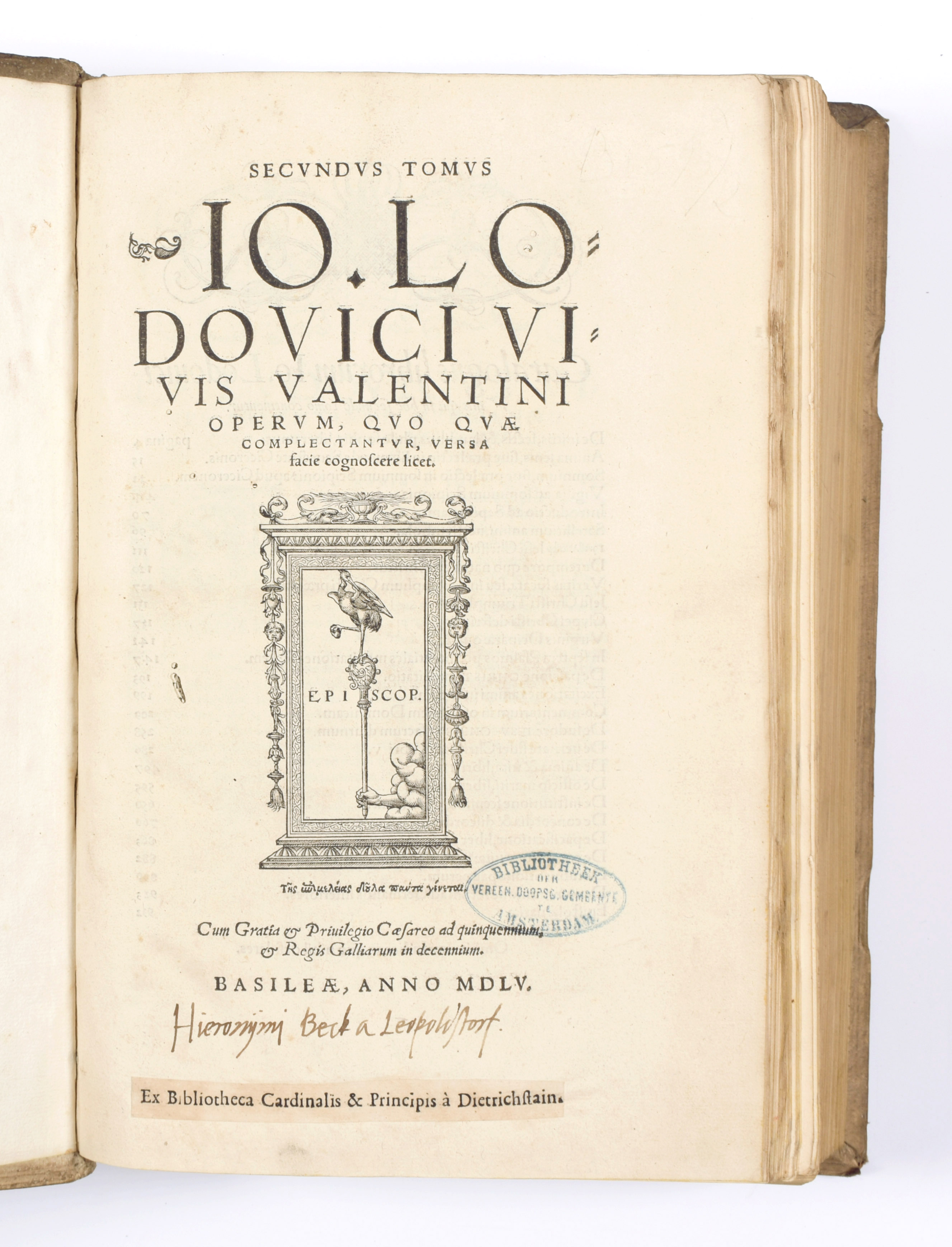
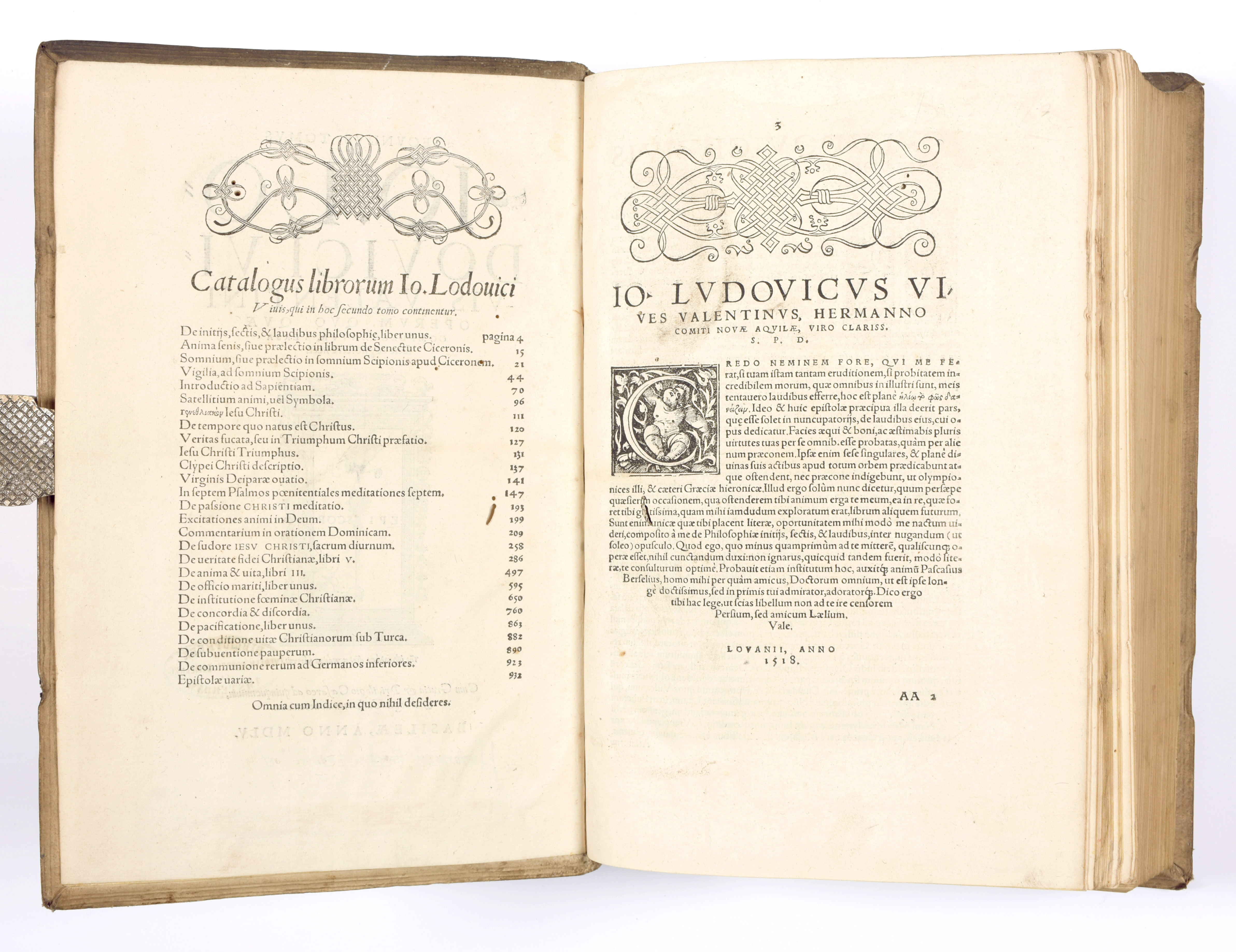
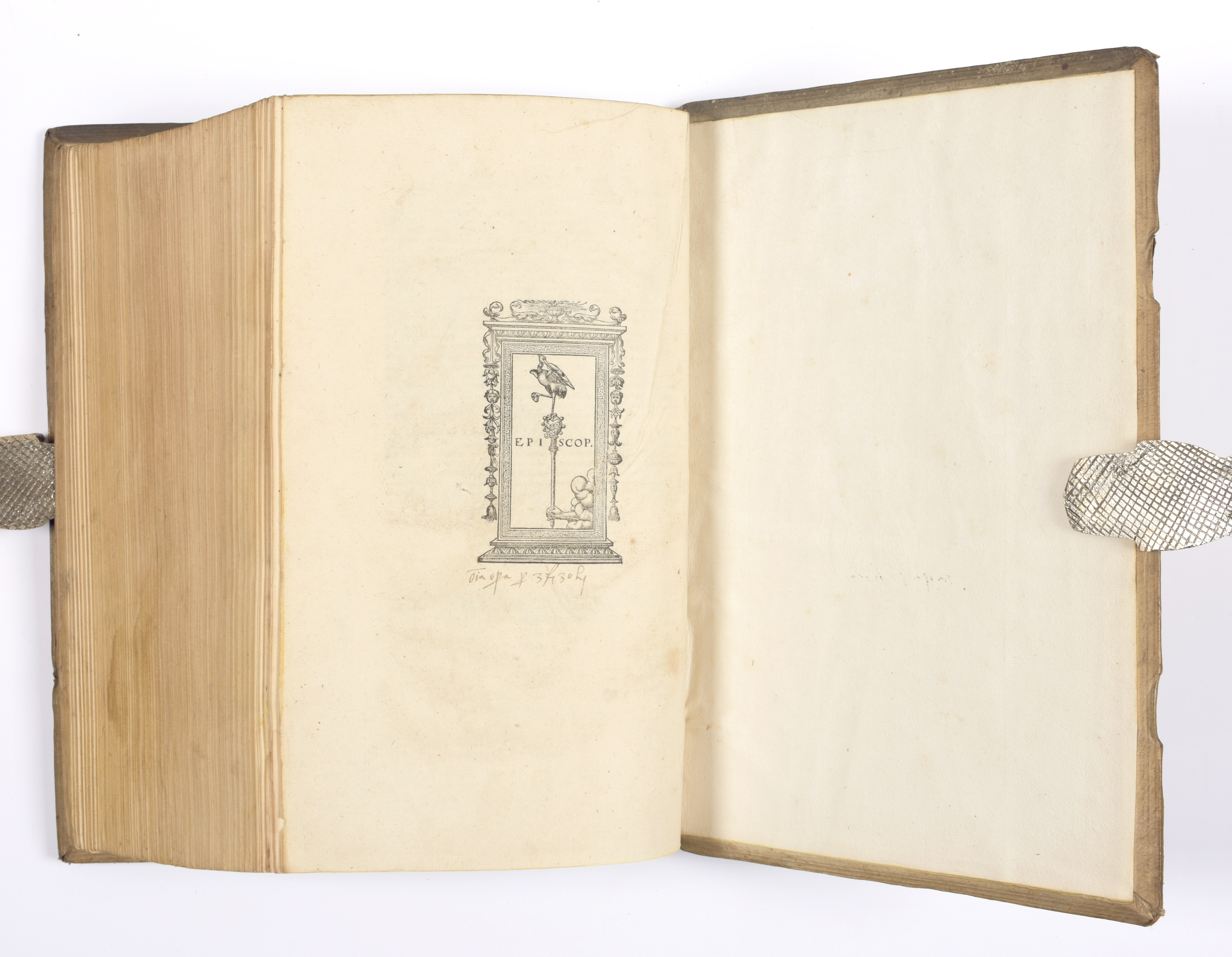
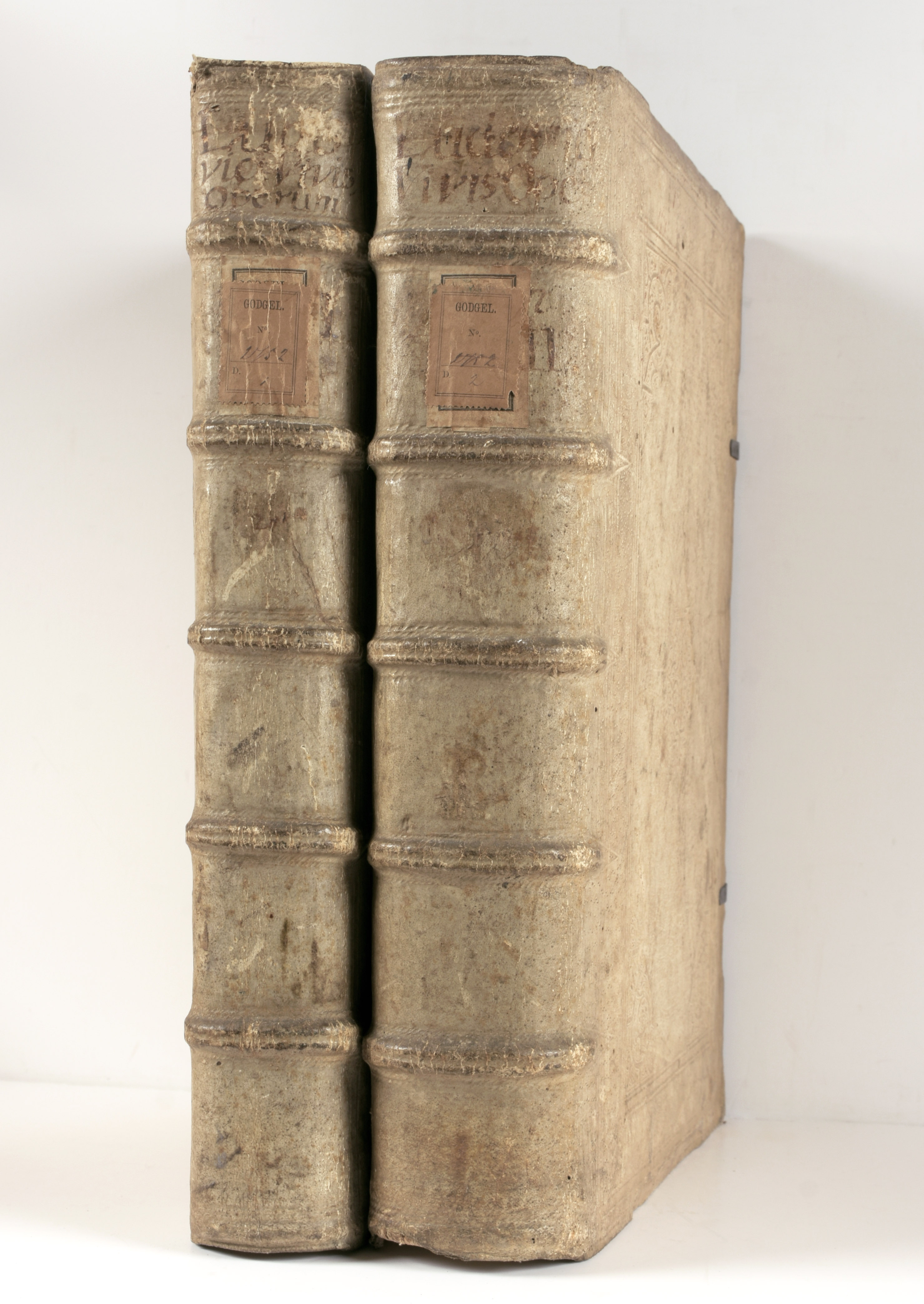
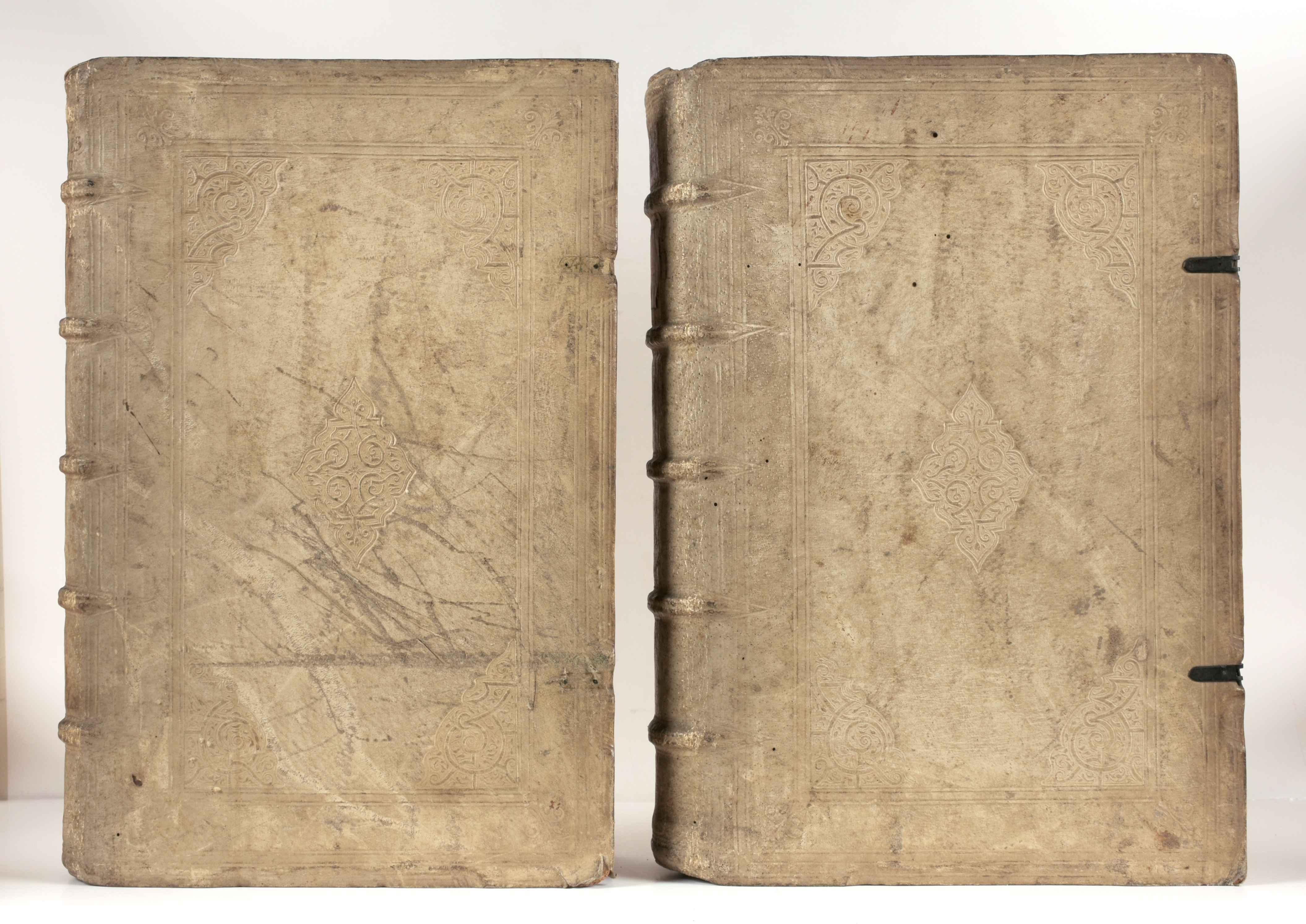
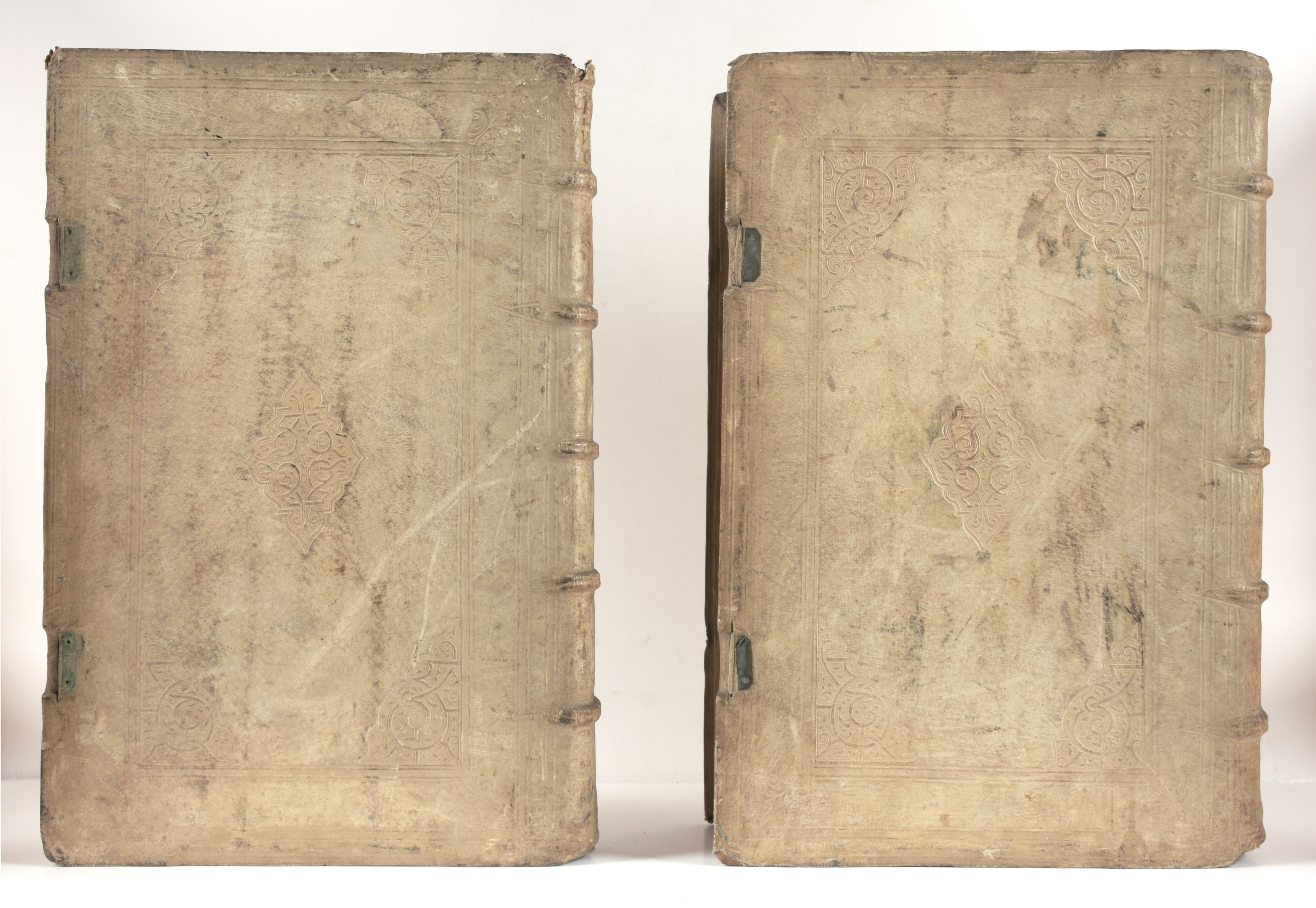
"2 vol. in-f°, [64], 687 (i.e. 675), [1] pp ; 978 (i.e. 977), [2], [2] pp, woodcut printer's device on each title page and on last page (a crane holds a stone in one of its claws. The hand extending from a cloud grasps a bishop's crozier on which the crane is perched). Numerous large historiated woodcut initials (with putti). Old library stamp on title page. Small wormholes in the beginning of each vol. Otherwise very well preserved. Old pigskin bindings, with blind tooling, some scratches, yellow edges"
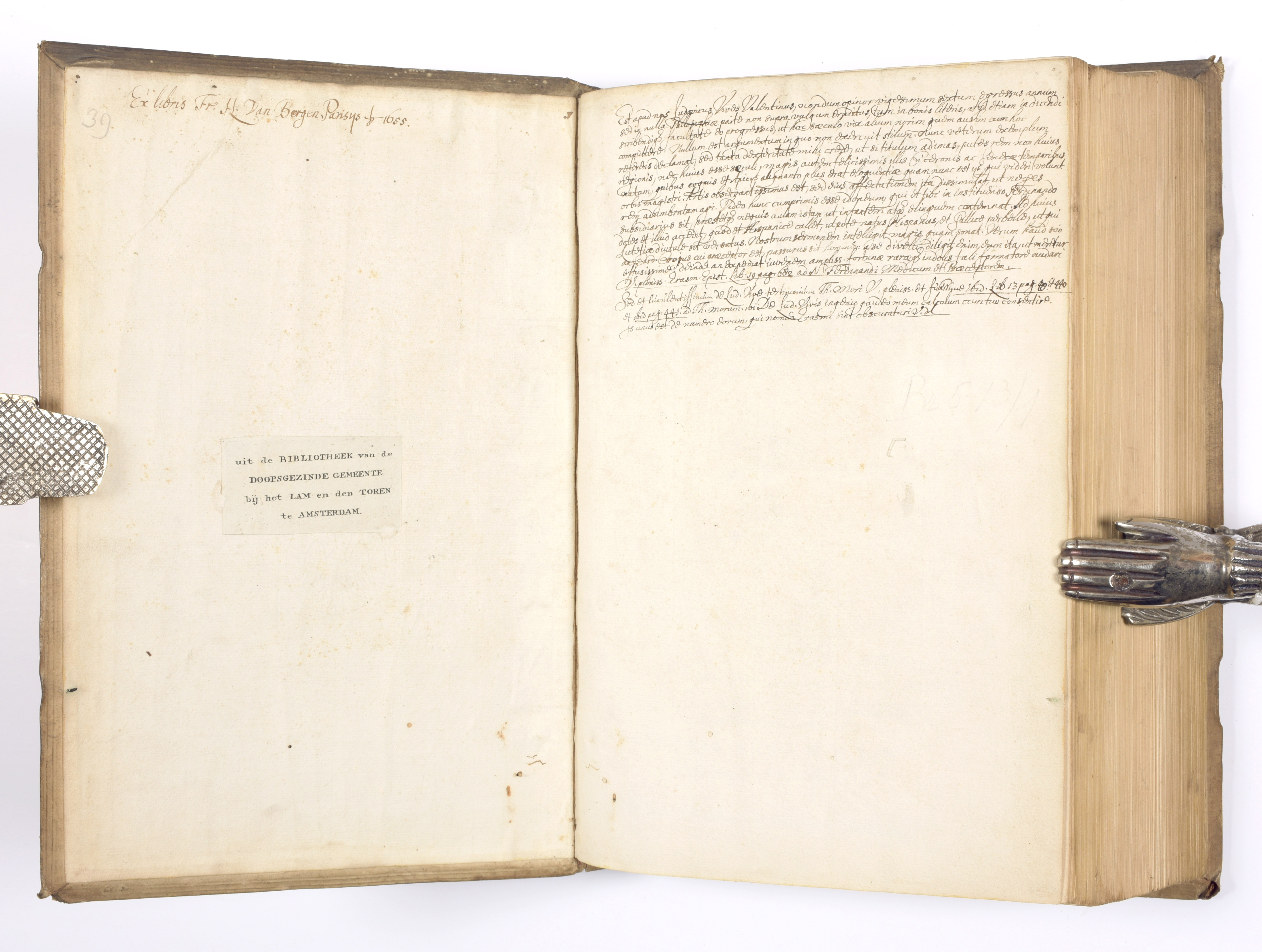
"First and only collected edition, published after the death of Vives (1493-1540). The importance of his works cannot be overestimated. Even Erasmus hardly knew of anyone to compare with him. It is very rare to find the complete set (not found in auction records of the last 30 years). Provenance: Dietrichstain, Fr. H. Van Bergen, Doopsgezinde Gemeente bij het Lam en den Toren. Ref. VD16 V 1773-1774, Adams V-935. Nicolaus Episcopius junior (°1531) was a grandson of Johan Froben, he died from the pest in 1565. Contains pedagogic works as 'Exercitatio linguae latinae', which is a Latin textbook consisting of a series of brilliant dialogues, 'De Disciplinis' in which he laments the decline of the liberal arts and of the university as institution. ""Vives often insists on the practical nature of knowledge; for instance, in 'De causis corruptarum artium', he maintains that peasants and artisans know nature far better than many philosophers"" ""The light of our mind is always, directly or indirectly, inclined toward what is good and true, and can be regarded as the beginning and origin of prudence and of all sciences and arts"" (Lorenzo Casini in the Stanford Encyclopedia of Philosophy)"