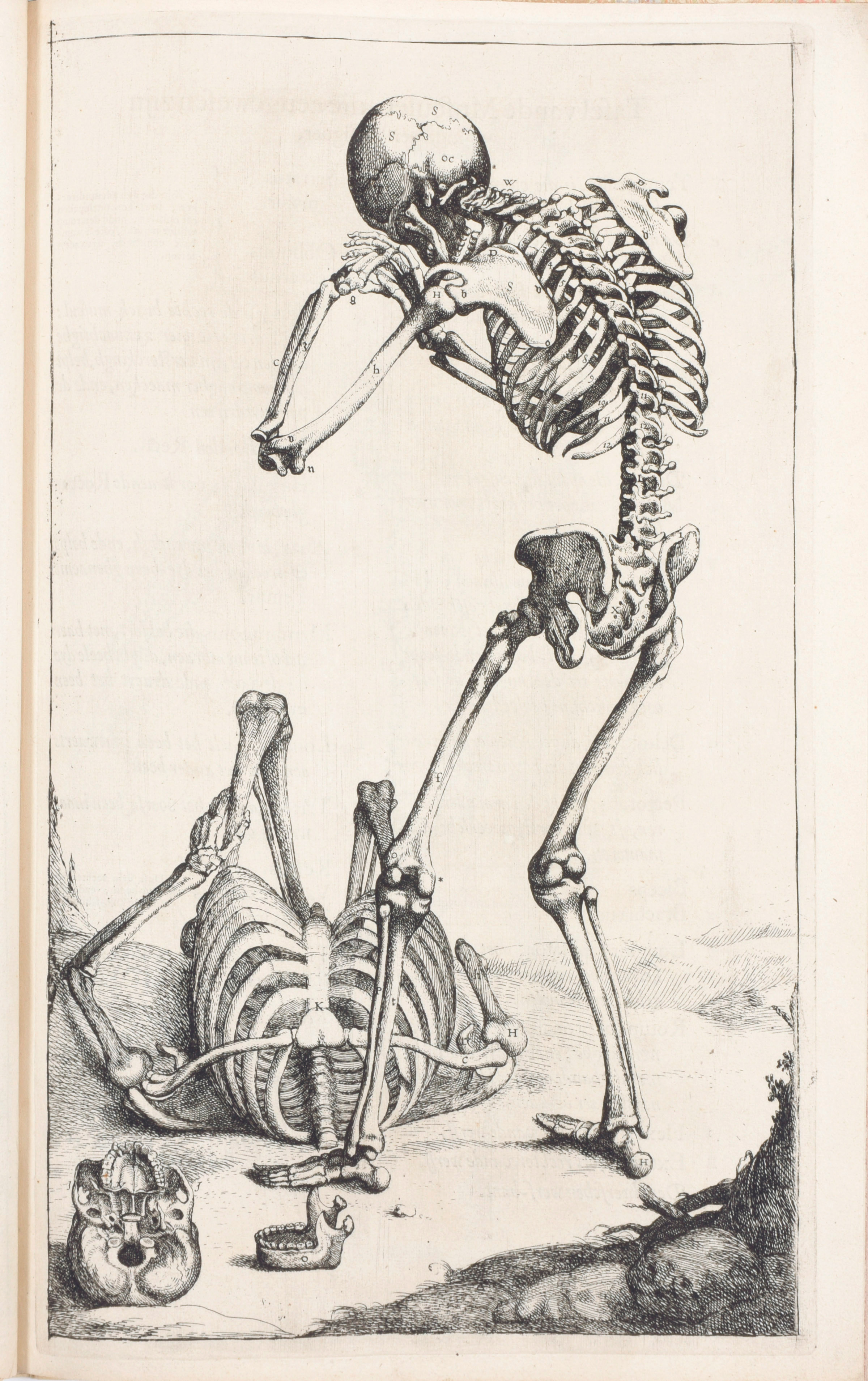
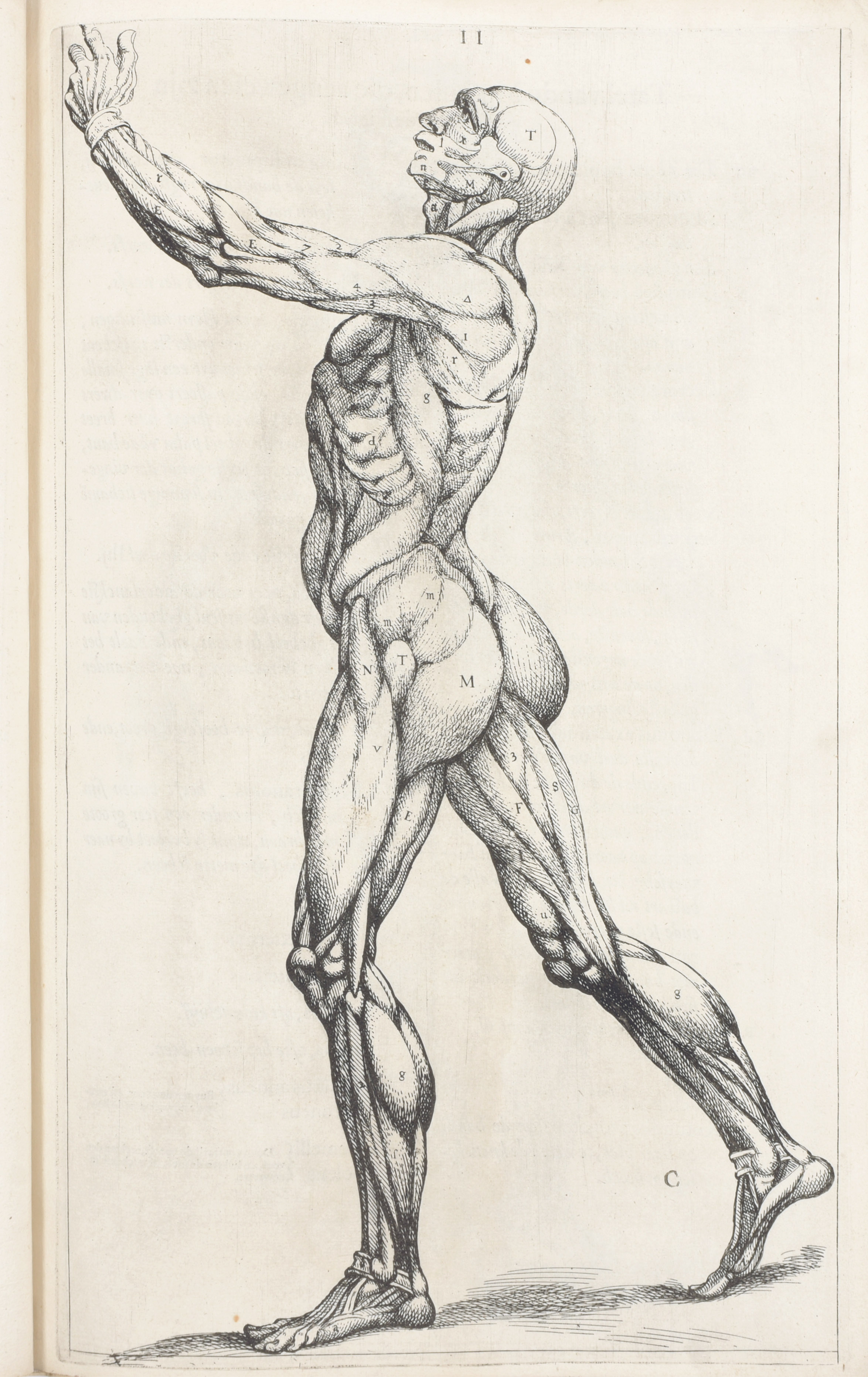
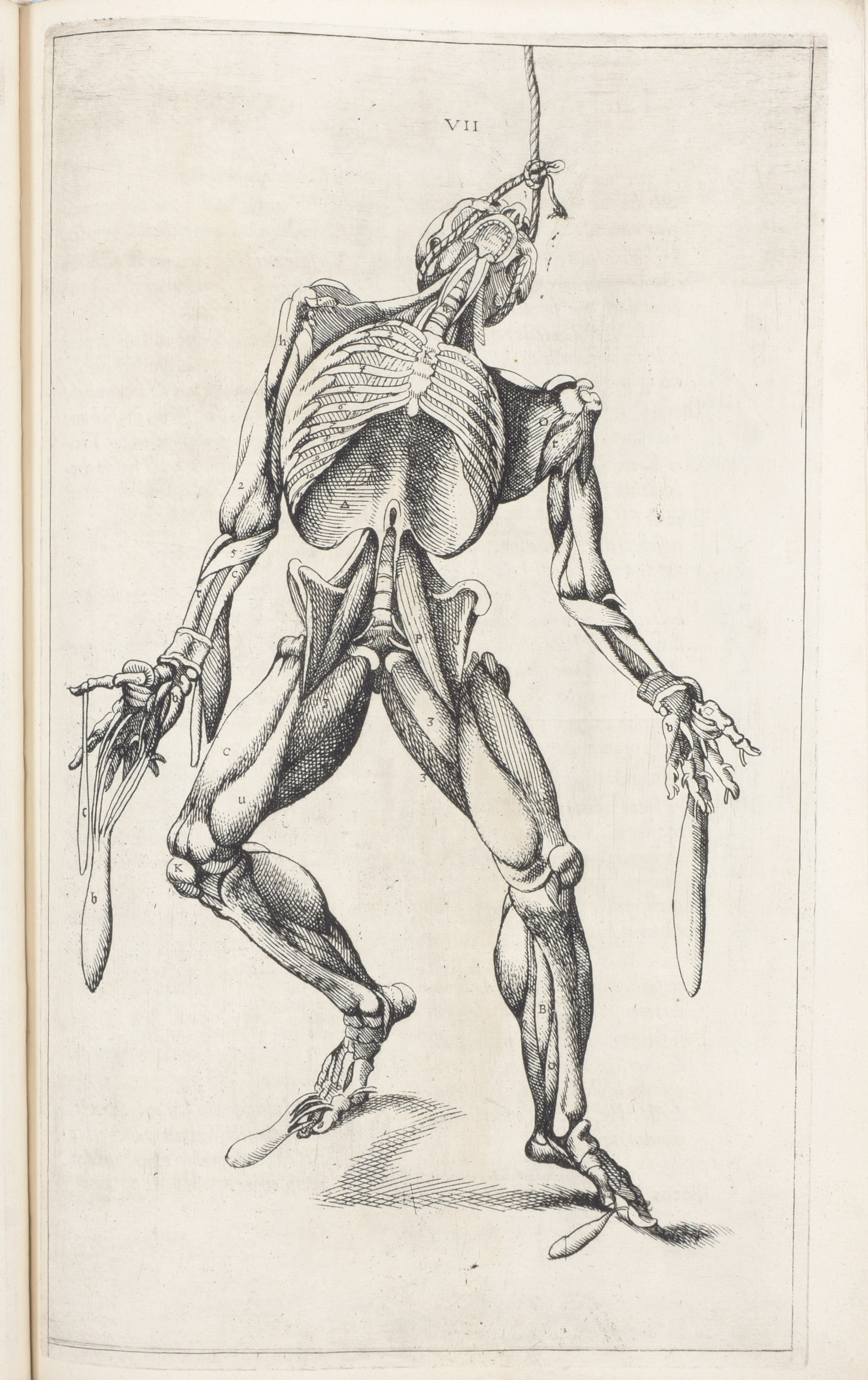
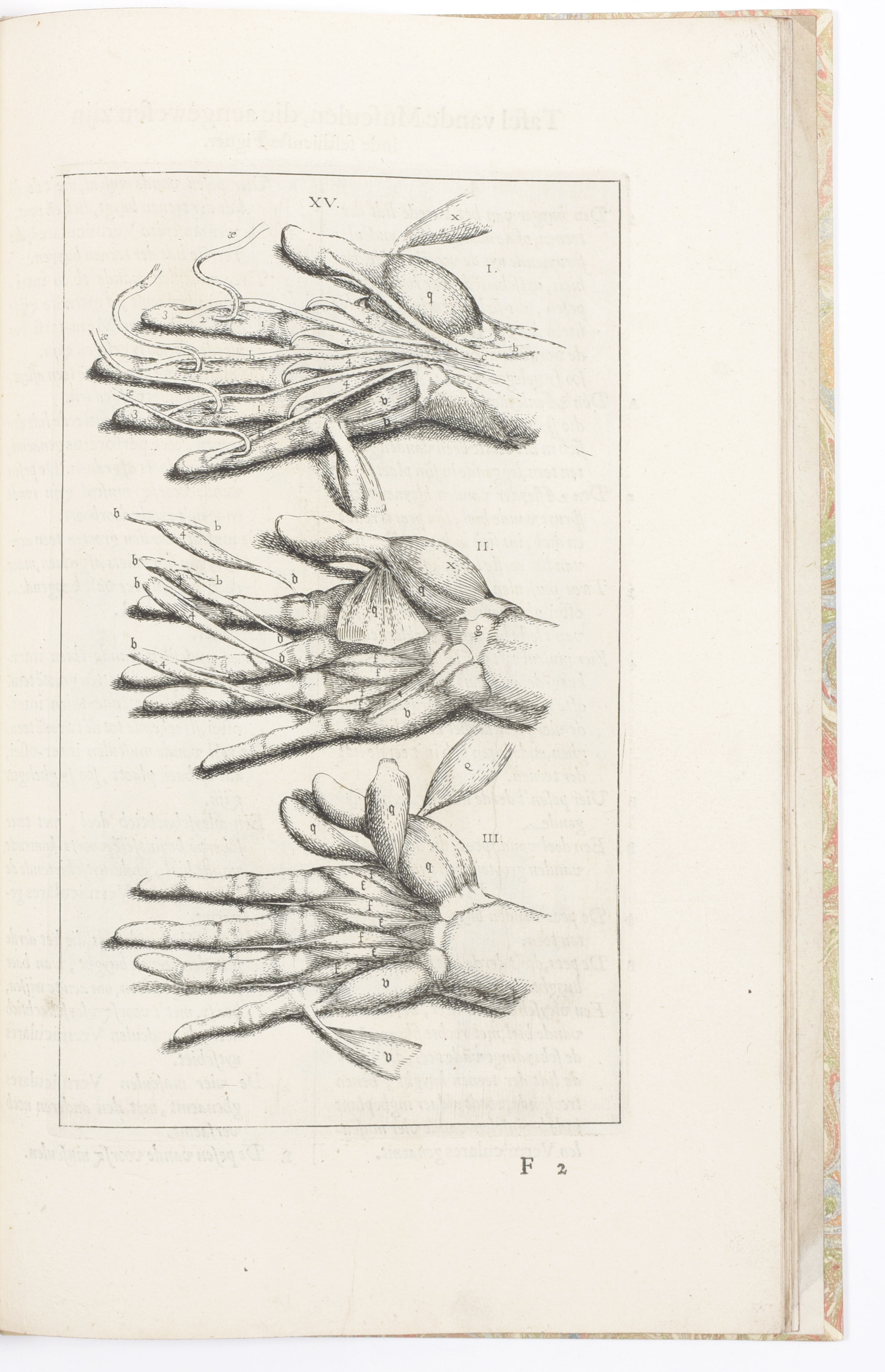
In-folio (40 x 25 cm), [33] ff, engraved title (margins skillfully repaired), text in Dutch, and 17 full-page skeletal, écorché and muscle engravings, the first unnumbered, the remaining numbered I-XVI. (some margins expertly strengthened, loss of sm. part of title bottom underlaid). Excellent copy with crafty impressions of the plates. Modern quarter vellum binding, marbled covers, red edges
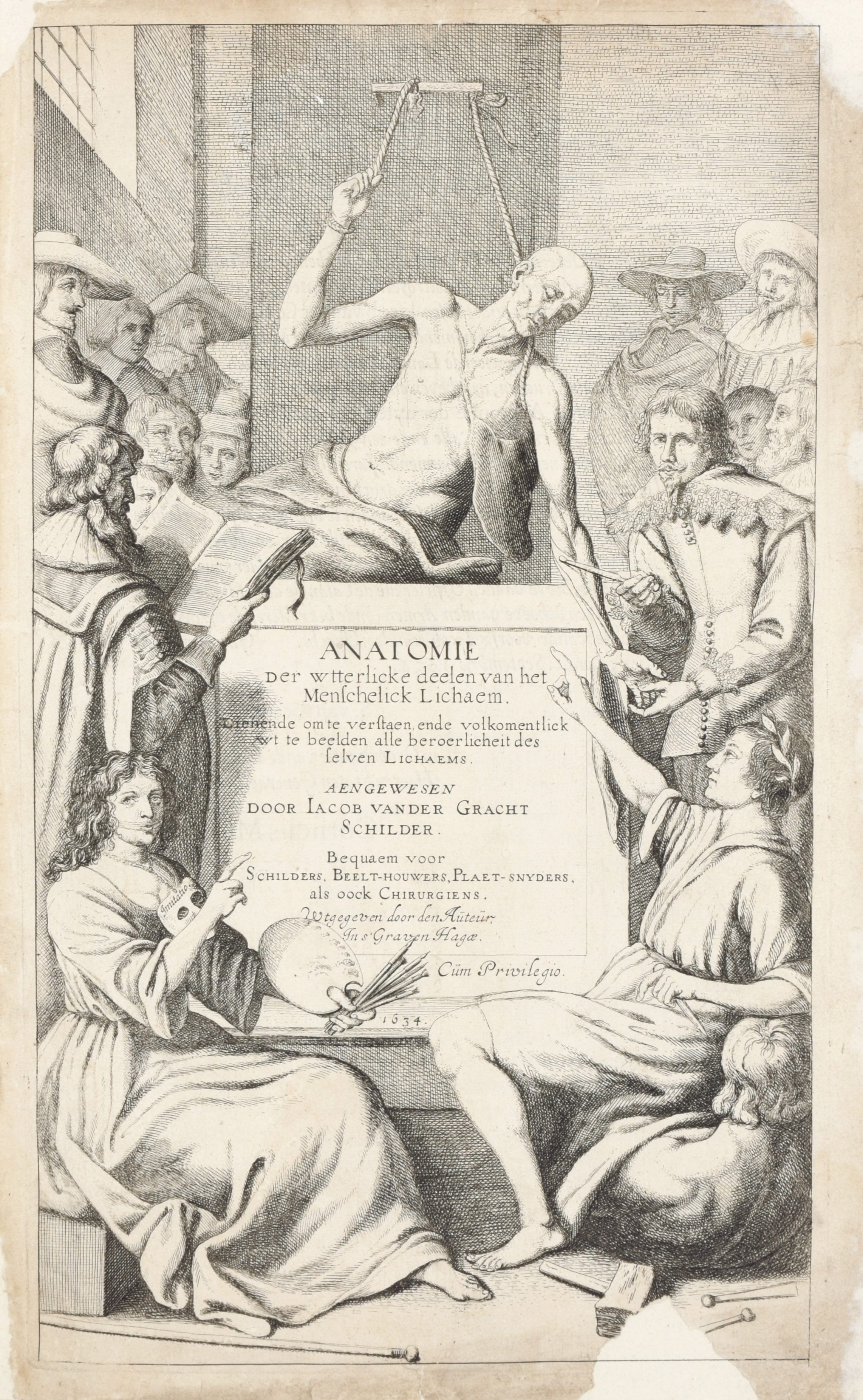
1st ed. (2nd enl. 1660) of what Choulant considered to be the earliest independent work of anatomy intended for graphic or plastic artists. Very rare. The painter, engraver and writer Van der Gracht (1593-1652) worked in Italy, studying anatomy there and even dissecting cadavers to get a thorough knowledge of the relations of the parts of the body. All but two of the engravings are careful derivations from Vesalius, and correct two of Vesalius' most serious errors: the scalenus muscle and rectus abdominis. He made his muscles more prominent than Vesalius and "achieved conspicuous success in showing the relation of the muscles to the bony skeleton" (Cushing). The title shows an anatomy lesson for artists with a cadaver suspended in the sitting position Vesalius used when demonstrating to artists. The text is from André du Laurens, Bartholomeus Cabrol, and Andreas Vesalius (the Epitome). In his preface, Van der Gracht implies that some of the drawings are after Michelangelo and Baccio Bandenelli, whereas actually, most of them are from Calcar's work for Vesalius' "Fabrica", with 2 plates lifted from Casserius. Ref. Bibl. Med. Neerl. I:80. Krivatsy 4920. STCN (i.a. BL). Not in Cockx-Indestege (Belgian Census), Osler, Waller, Wellcome