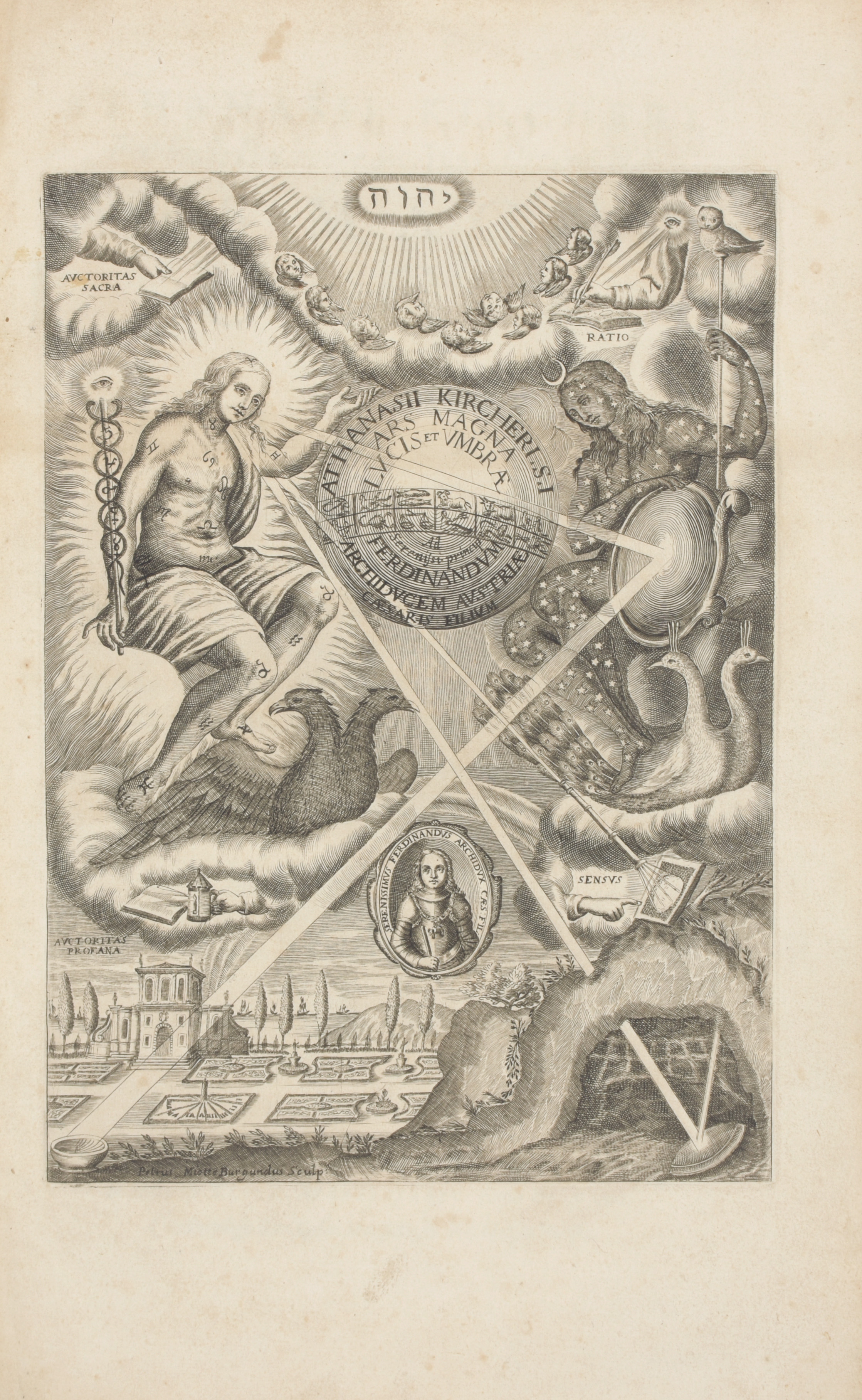
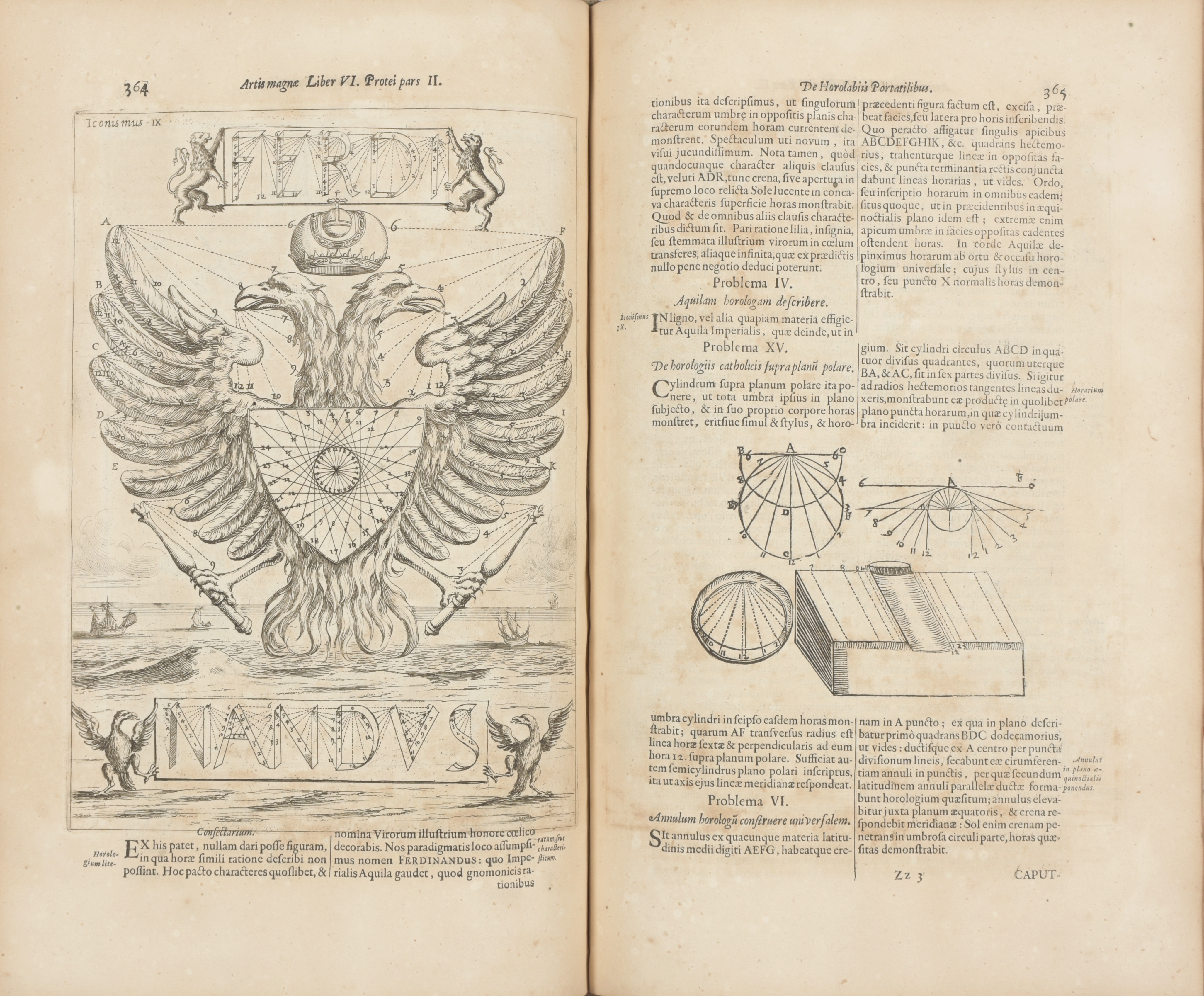
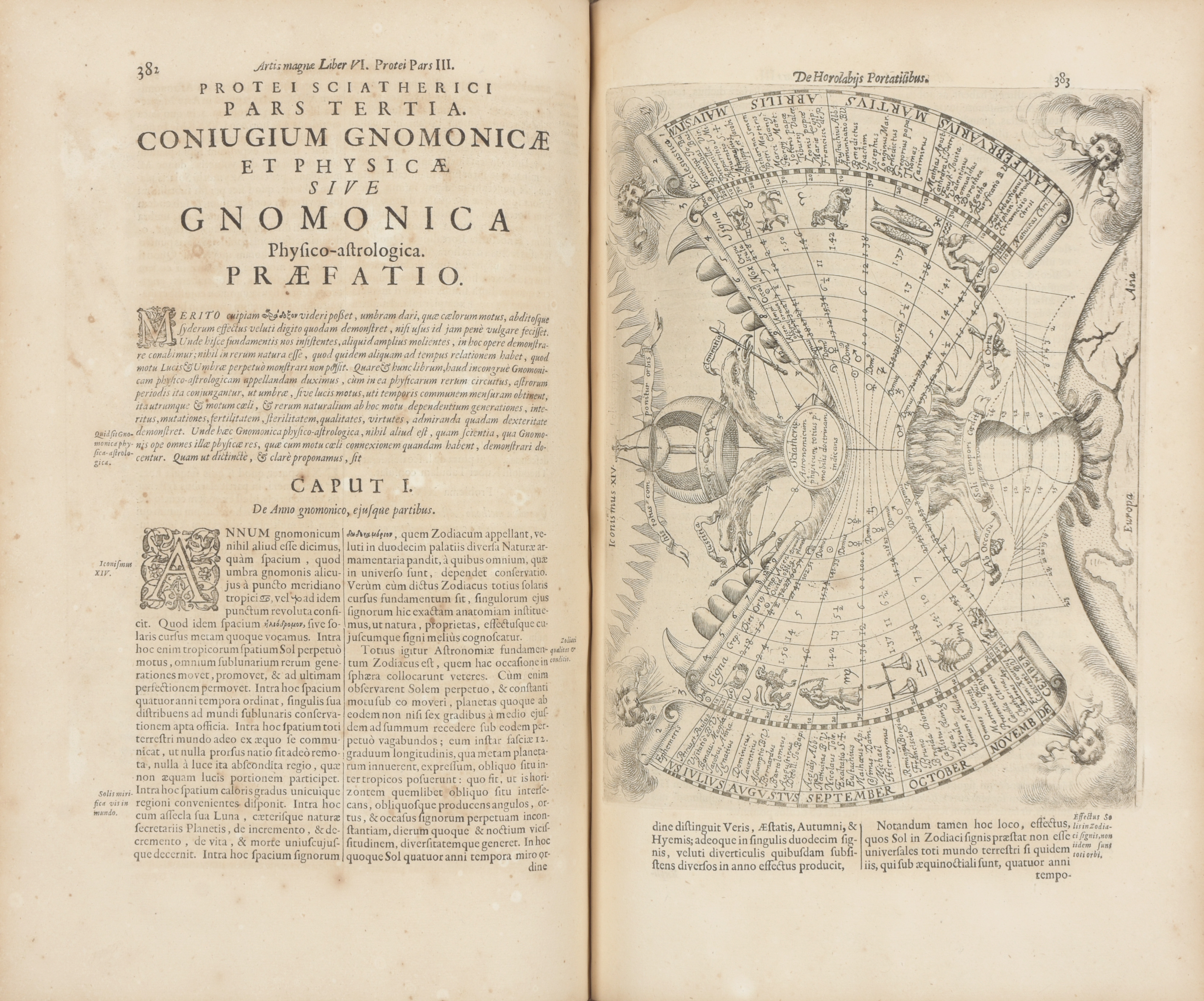
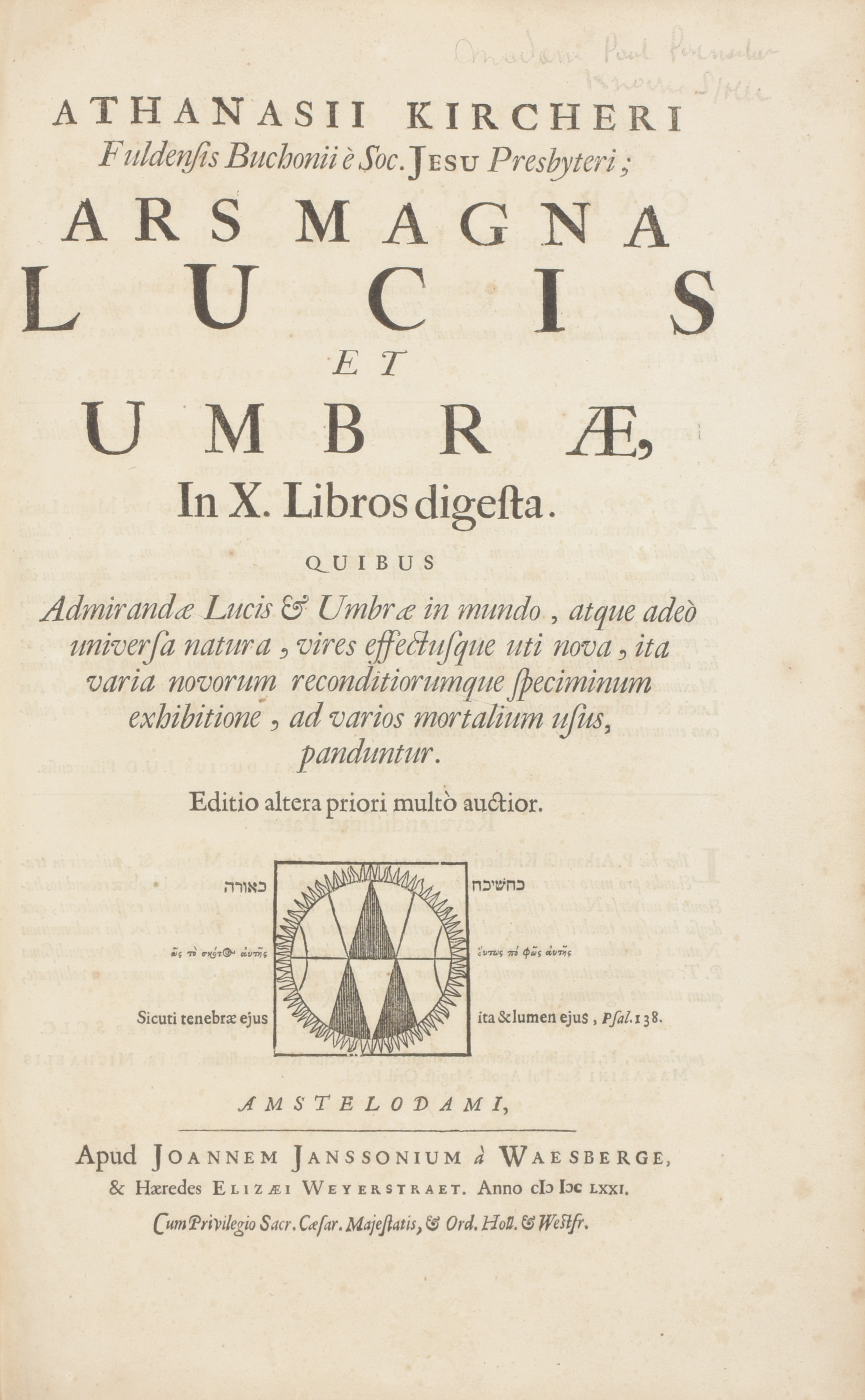
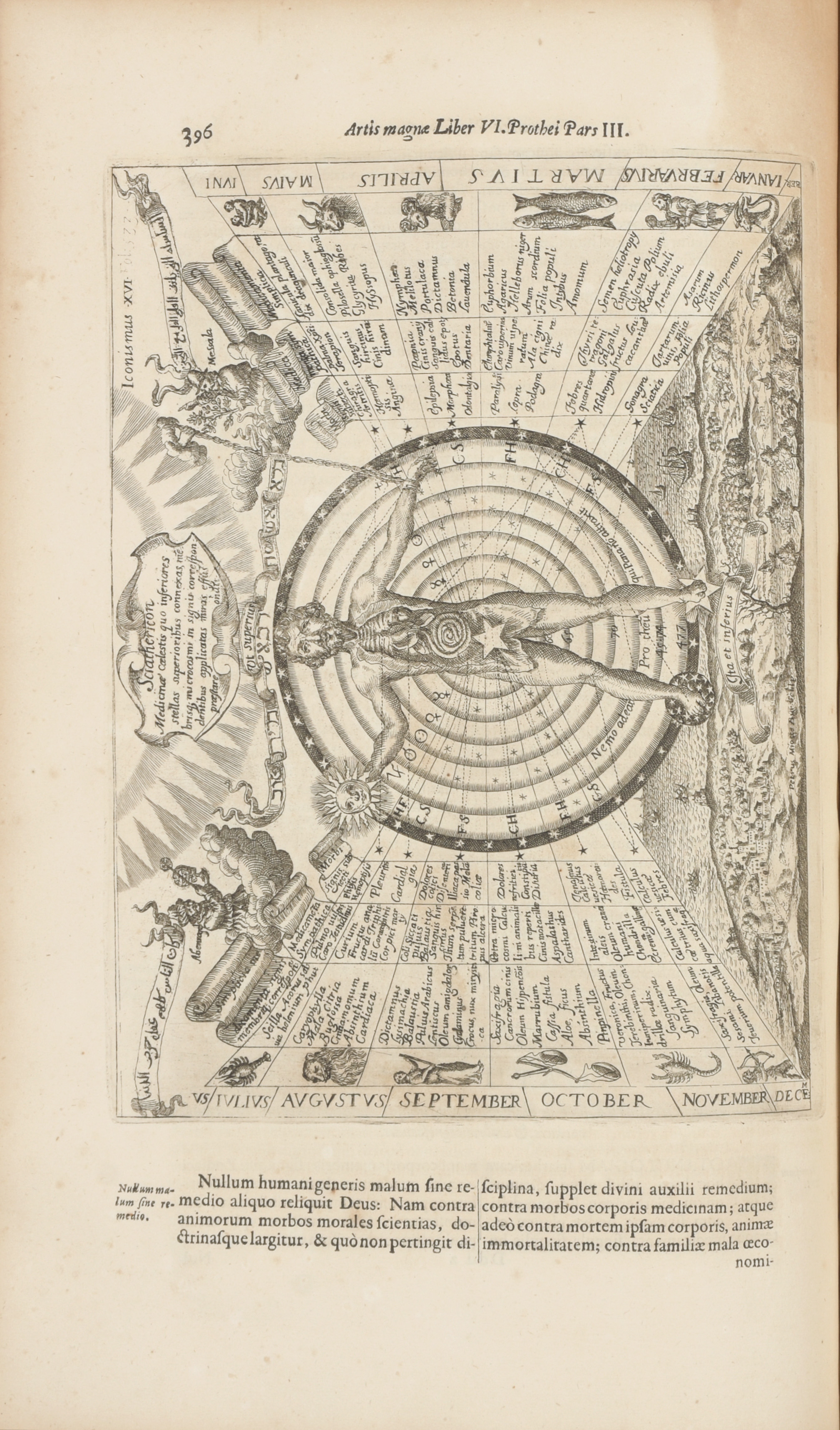
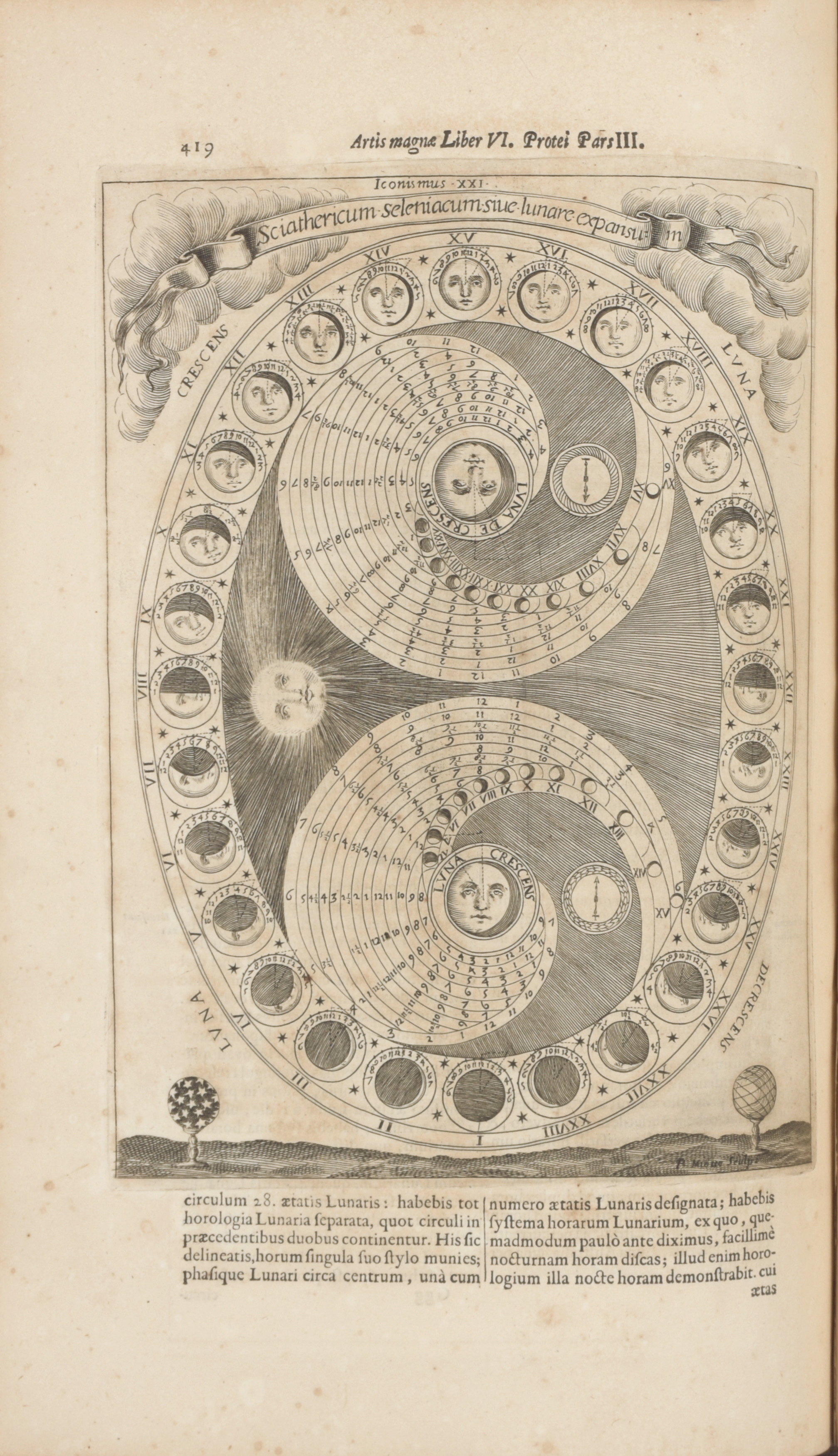
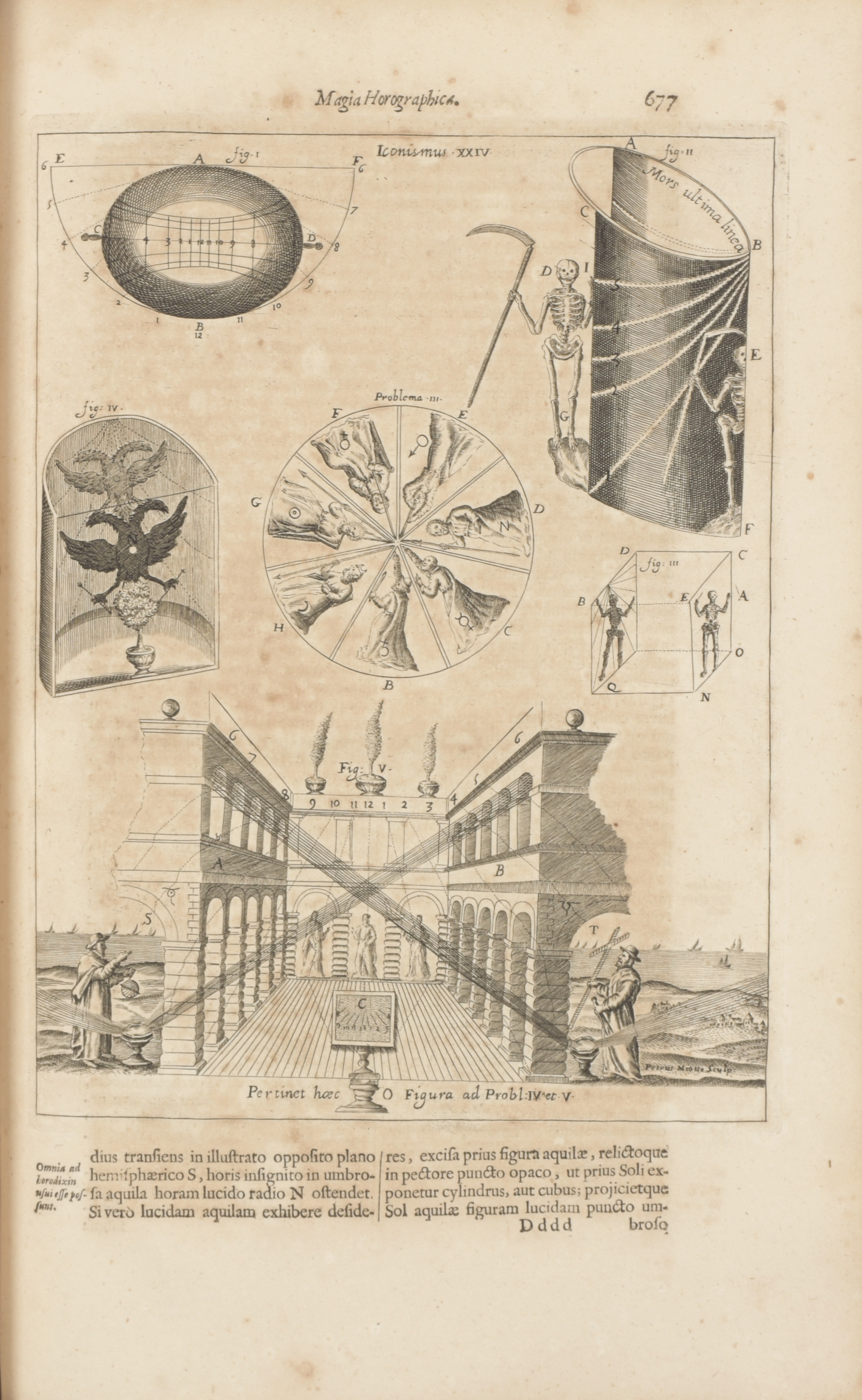
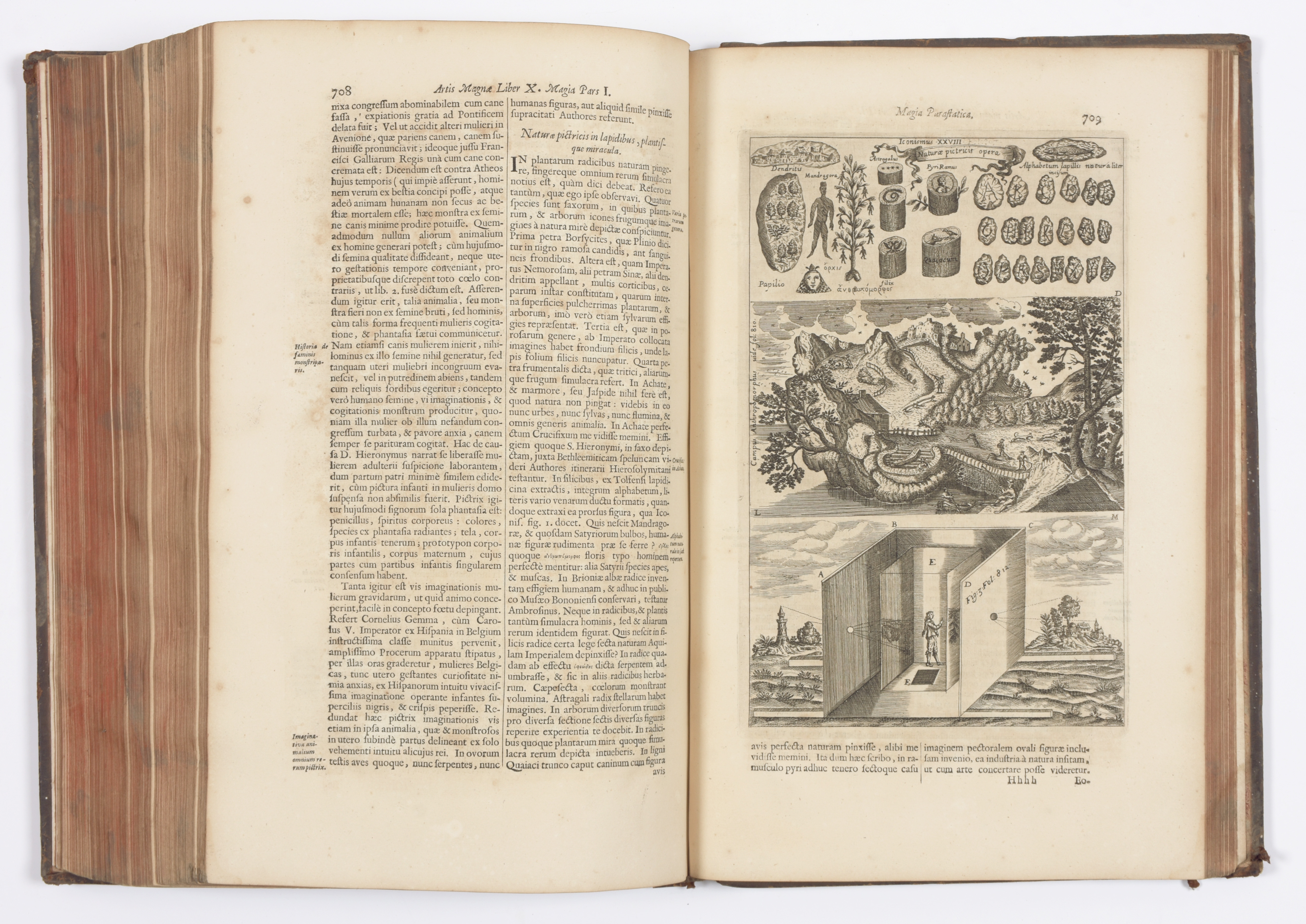
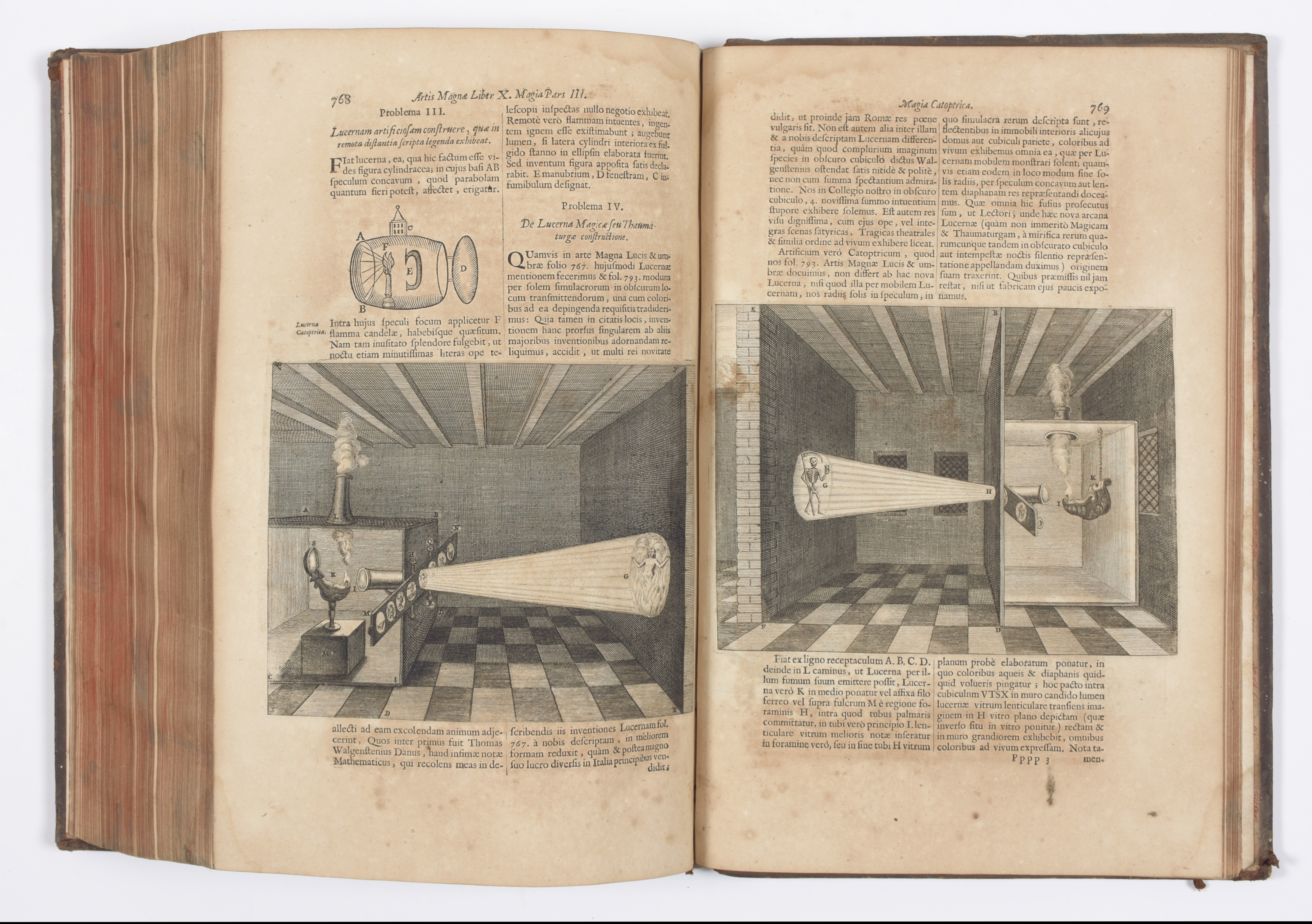
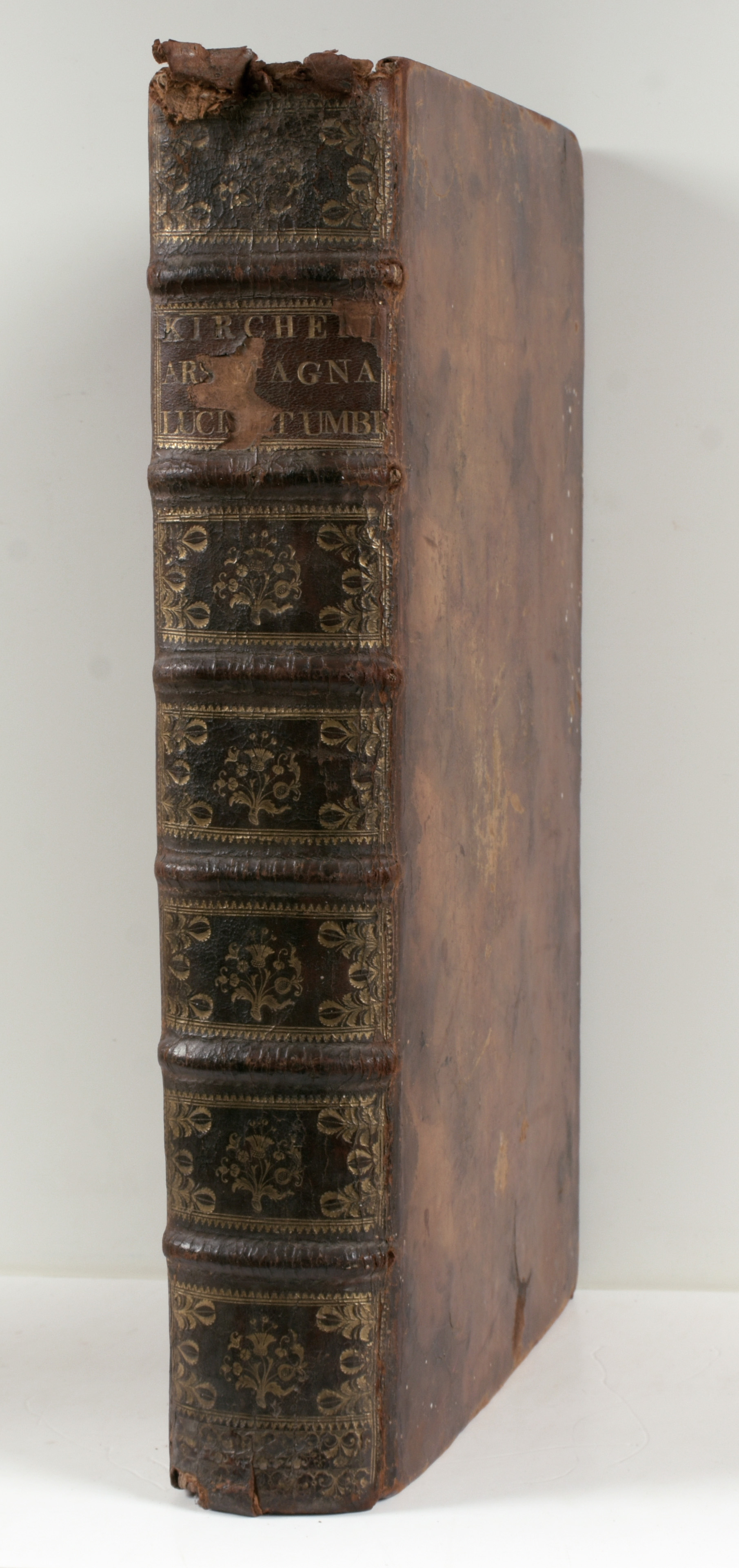
In-folio (37,3 x 24 cm), [32], 810, [9] pp, allegorical engraved title (Petrus Miotte Burgundus), portrait of Joannes Fridericus, graaf van Waldstein, very large folding plate, showing the horoscope of the Jesuit Order (tear without loss), 7 full-page engravings (i.a. 3 outside collation) and 36 very large engravings. Numerous woodcuts and diagrams. Pagination jumps from 424 to 525, without loss. Age-toned (some quires more heavily due to the quality of the paper), foxing. Contemporary calf binding, spine with 6 raised bands, binding worn, marbled end-lvs, red edges
Ex libris héraldique Joseph-Gaspar de Servais, met motto ""Bien faire et ne rien craindre""
Ref. Caillet 5770 ; Ferguson I, 466 ; Graesse IV, 21 ; Brunet III, 666 ; Poggendorf I, 1259 ; Sommervogel IV, 1050; Godwin: Athanasius Kircher, A Renaissance Man and the Quest for Lost Knowledge (1979). Second edition, originally published in Rome in 1646. Kircher dealt comprehensively with many different aspects of light, including physical, astronomical, astrological and metaphysical. Ars Magna is the first of Kircher's works to follow a symbolic structure. The ten books have a kabbalistic significance, betokening the ten sefirot. The magic lantern is depicted on pages 768-769. Kircher is sometimes, incorrectly, credited with inventing this device