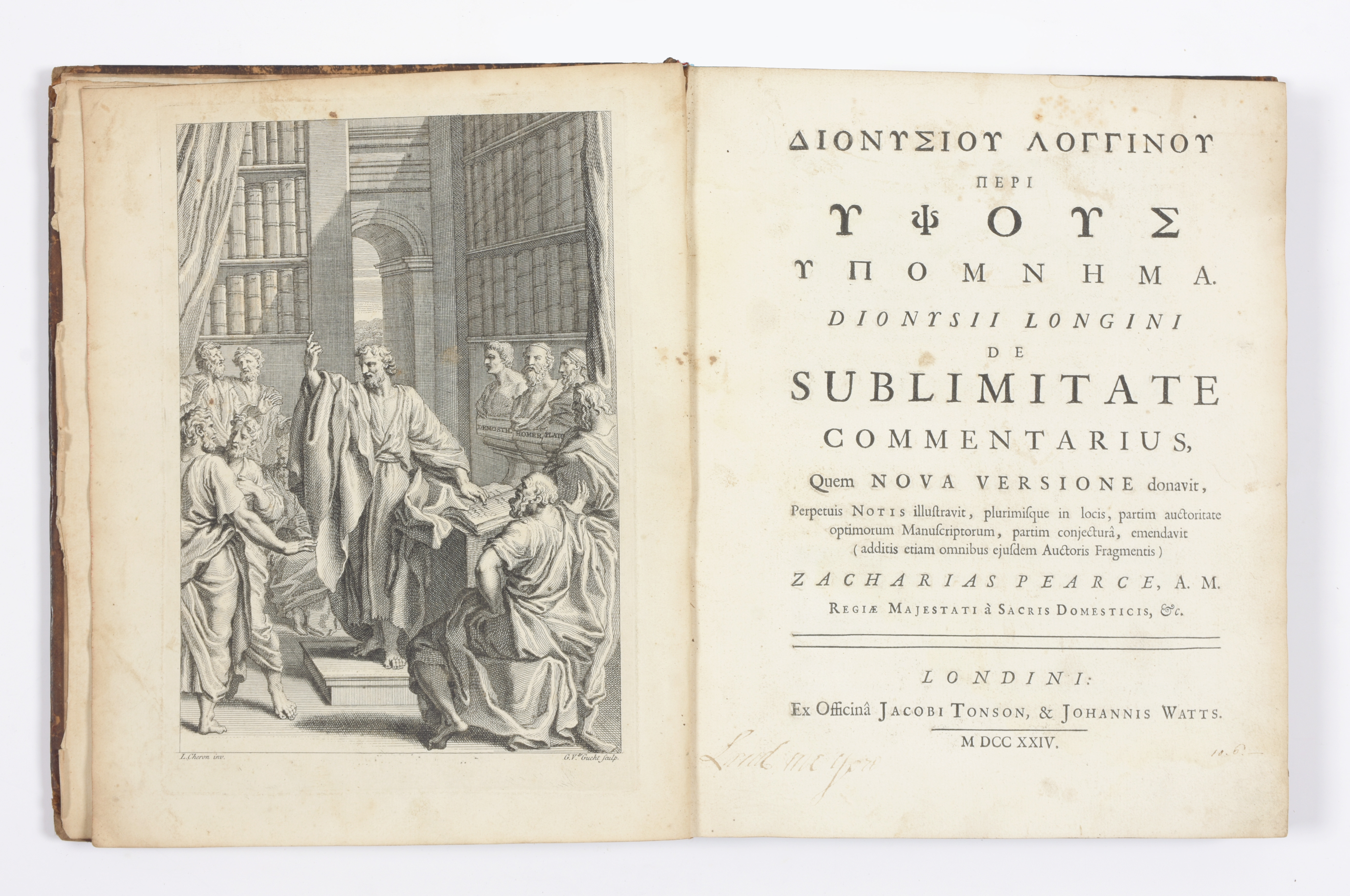
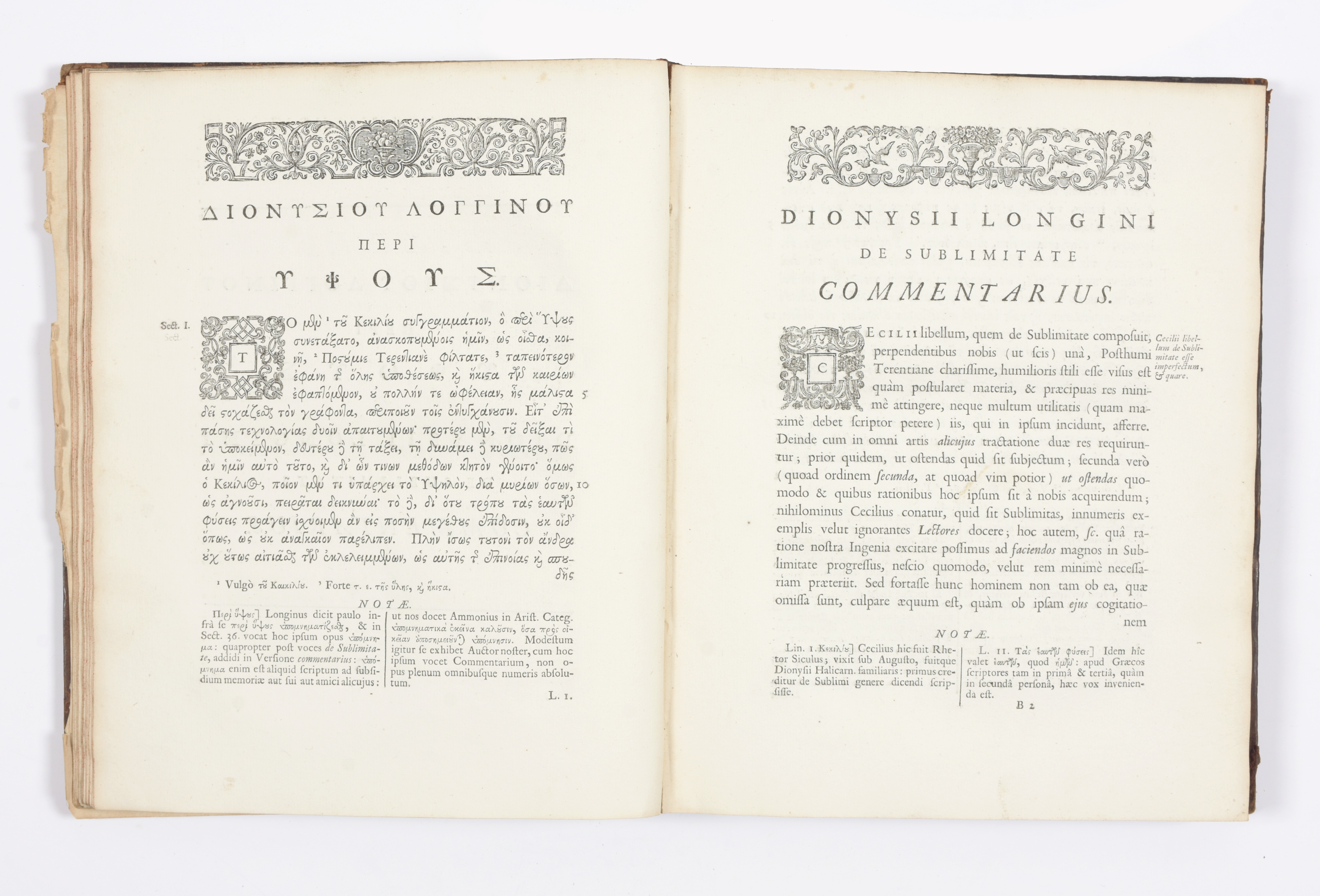
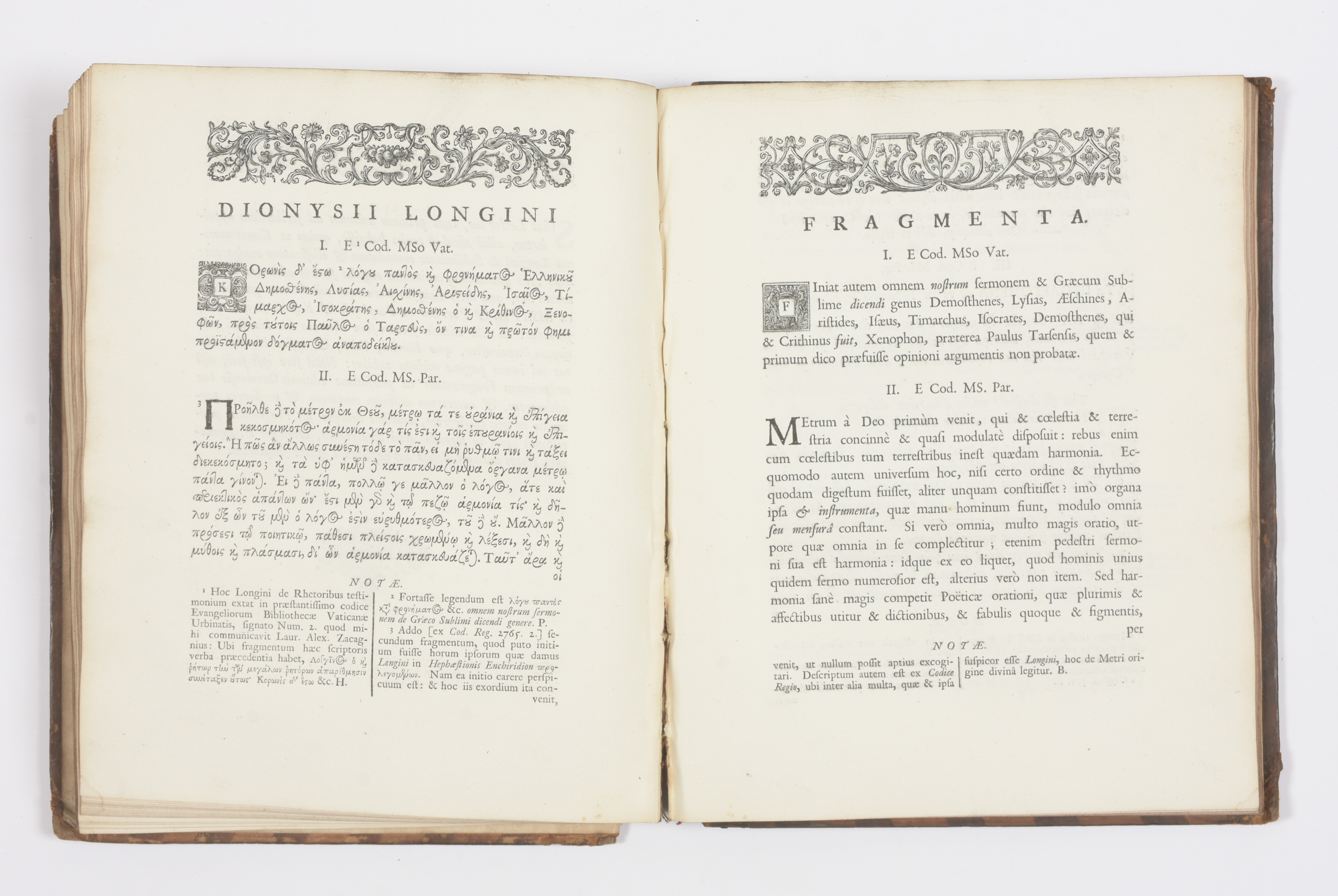
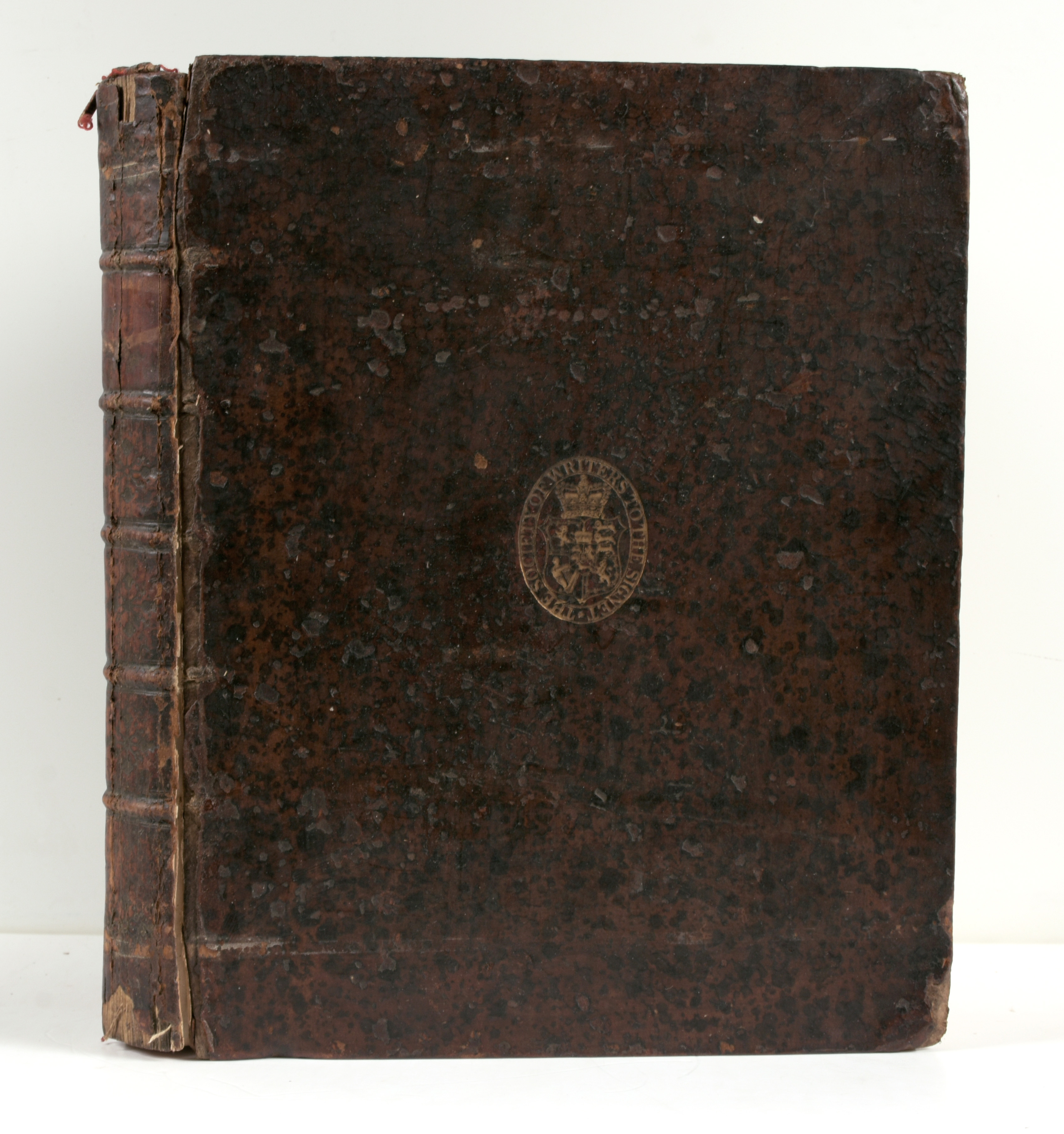
4to, (8), xv, (1), 187, (1), 28, (15) pp. With engraved front. & engraved headpiece by G. v.d. Gucht after L. Cheron. Text in GREEK & Latin: the Latin translations appears alongside the original GREEK with Pearce's notes and commentary. Contemporary mottled calf binding, with gilt supra libros on both cover (The Society of Writers to the Signet), upper cover loose, corners and ends of spine worn, red sprinkled edges
Ref. Hoffmann II, 526-27; Schweiger I, 189; Dibdin II, 177-78: ""Bishop Pearce is rightly called by Harles 'Longini Sospitator.' In the first elegant quarto edition he has presented us with the true text of his author, a new Latin version, and some elegant and erudite notes."" ""On the Sublime"" is regarded as a classic work on aesthetics and the effects of good writing. The treatise highlights examples of good and bad writing from the previous millennium, focusing particularly on what may lead to the sublime. It is not certain that Dionysius Longinus (c. 213 - 273 AD) was the actual author, it has also been attributed to Cassius Longinus, Dionysius of Halicarnassus or Dionysius Atticus. Werner Herzog says that he thinks of Longinus as a good friend and considers that Longinus's notions of illumination has a parallel in some moments in his films