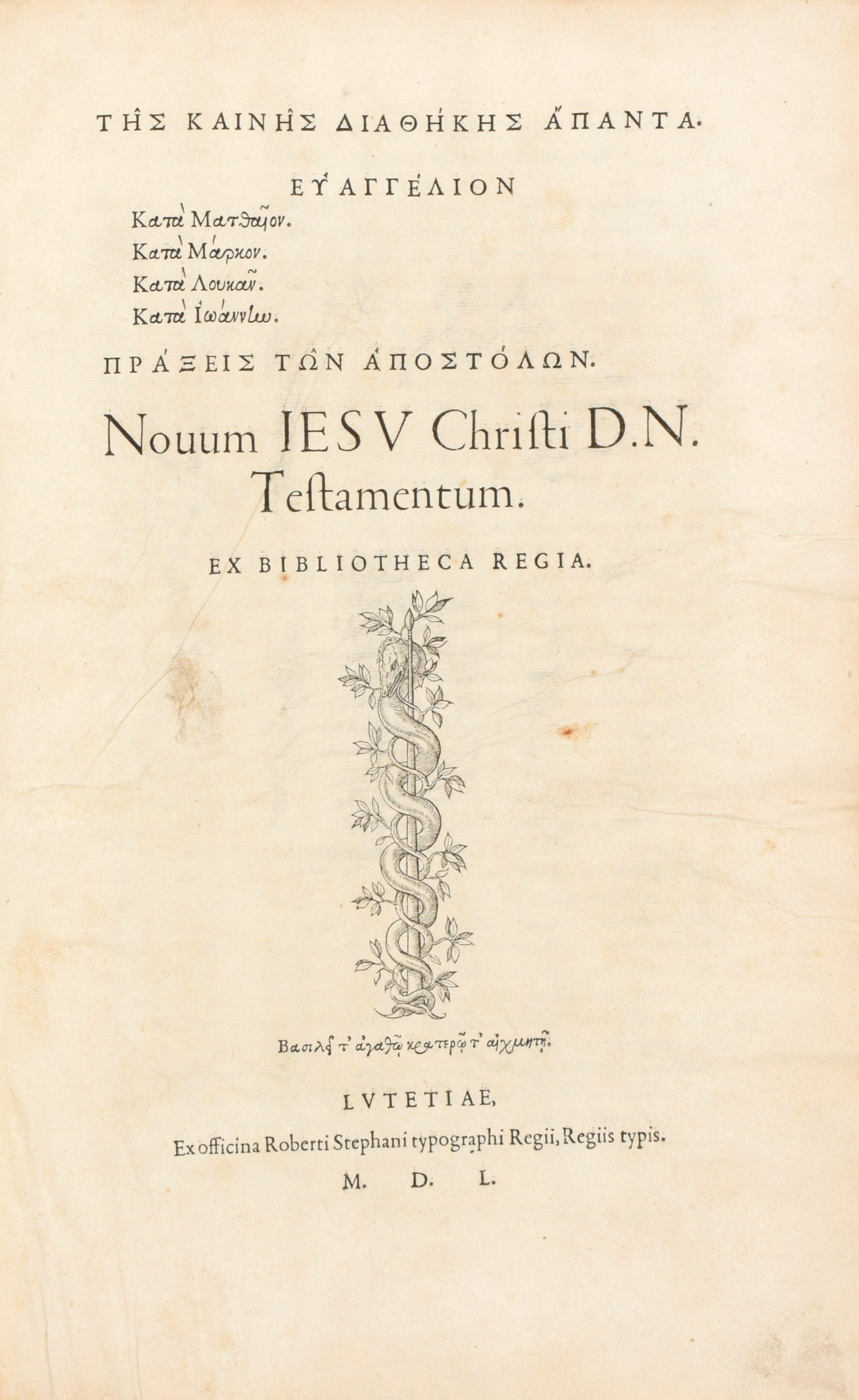
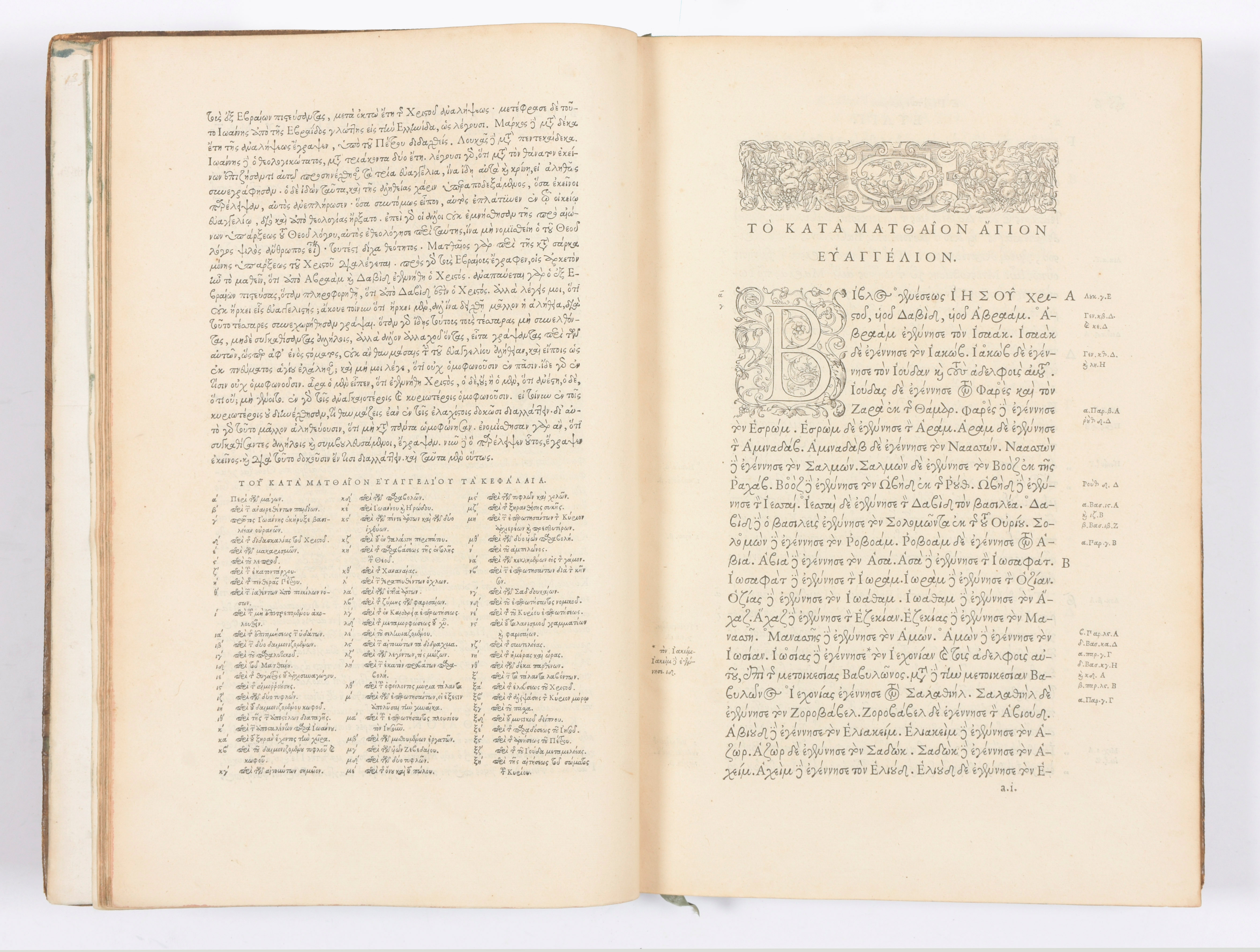
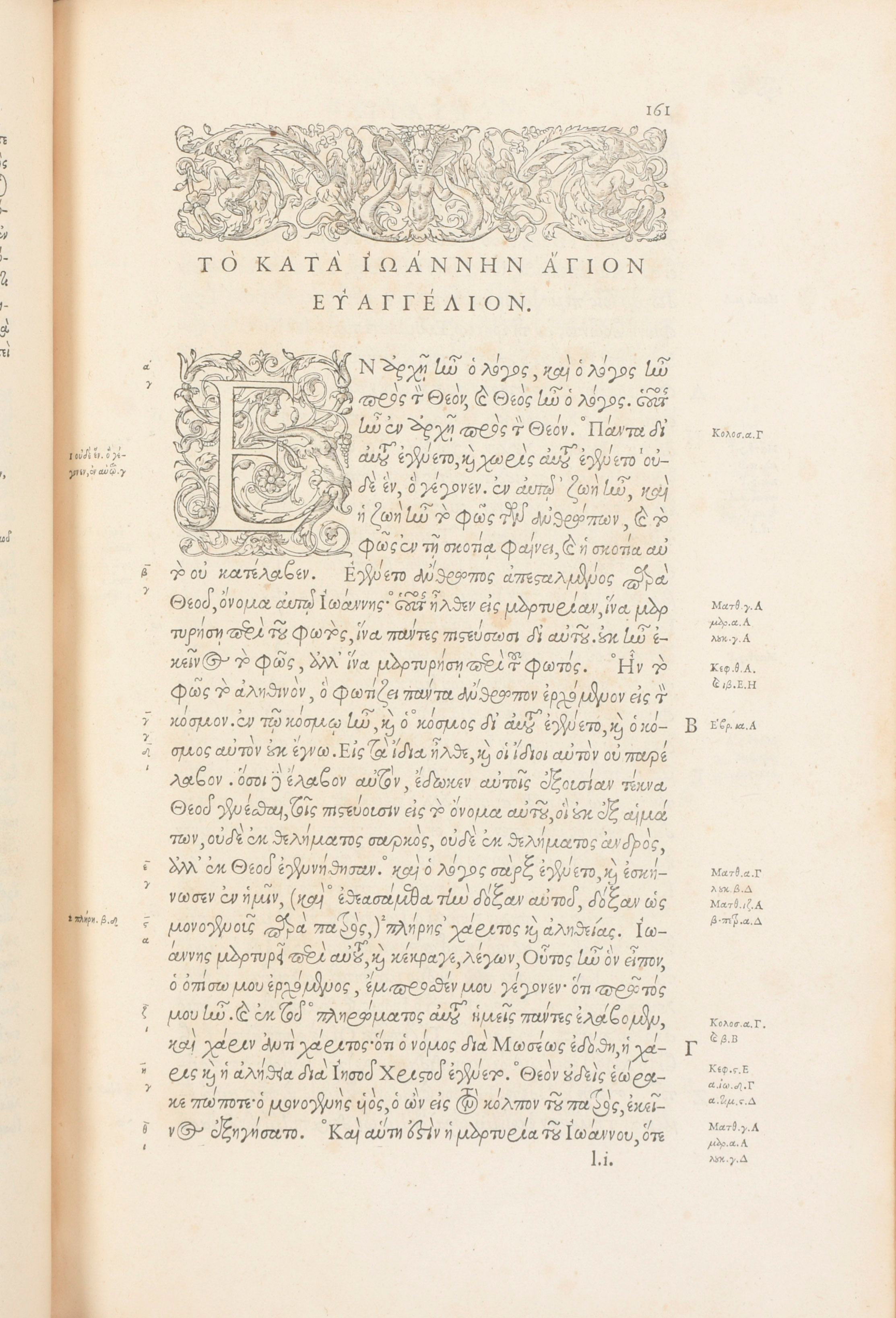
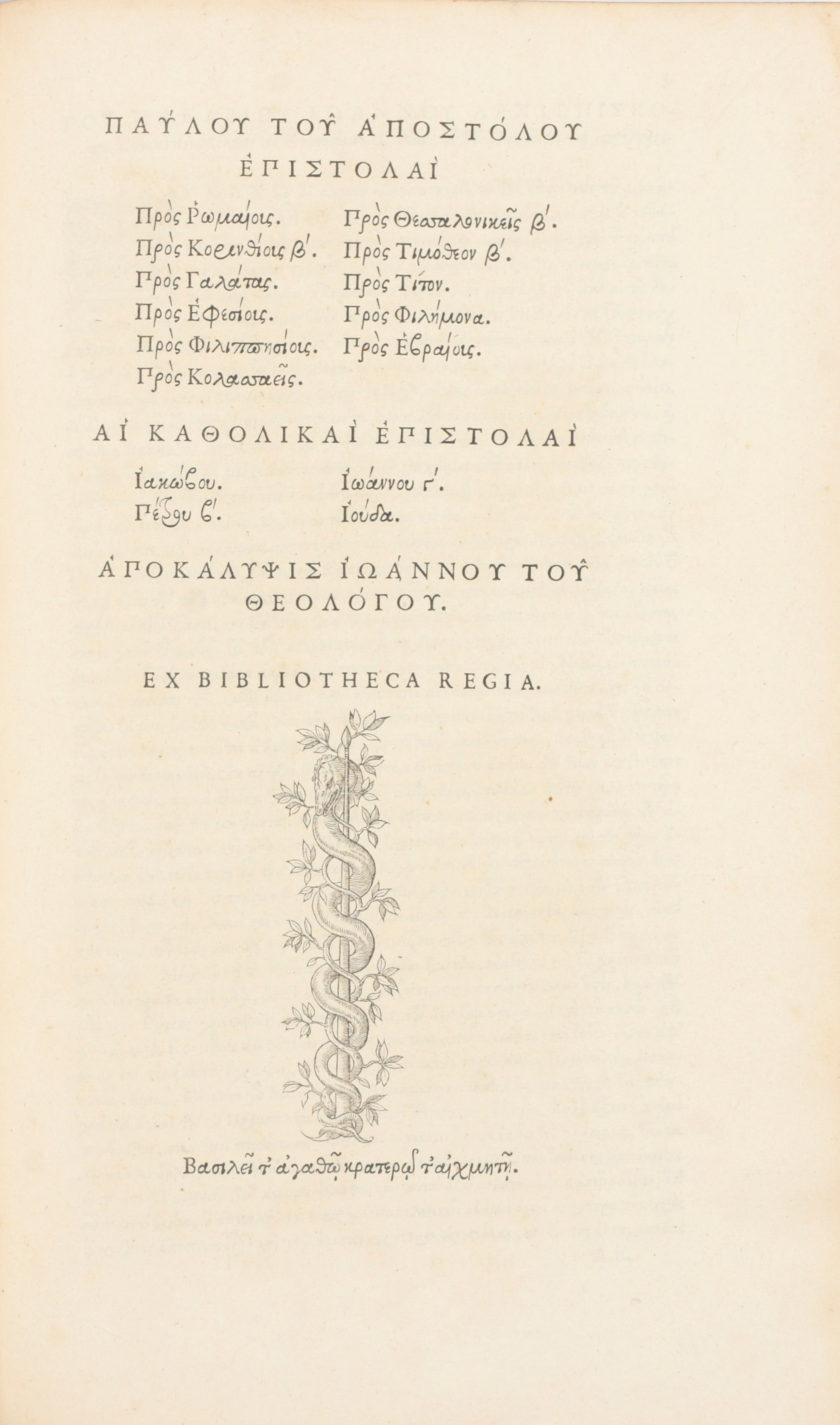
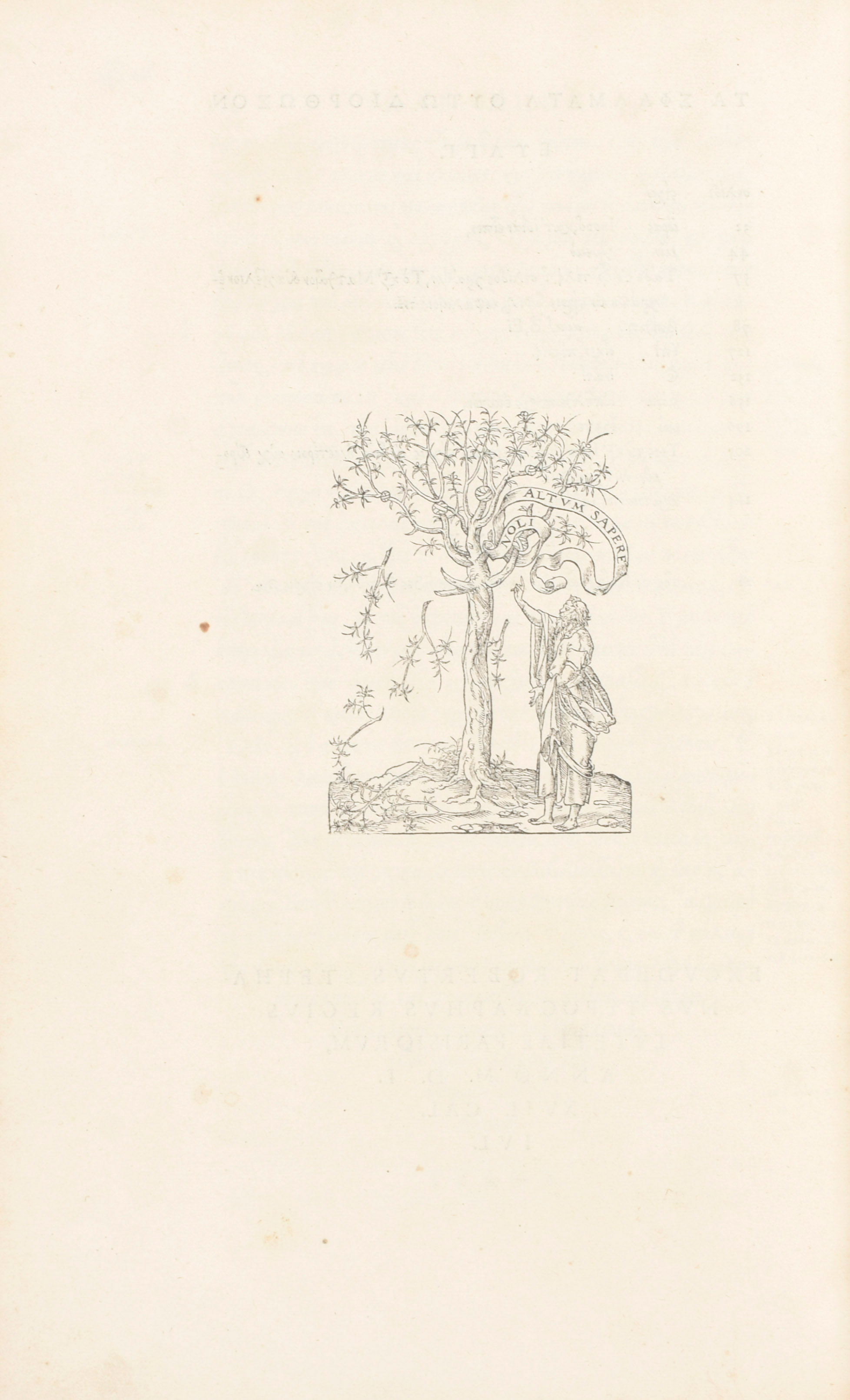
In-folio (34,3 x 22 cm), [32], 272 (=268); 202 [2] pp, Stephanus' prefatory letter in roman (1 page) otherwise printed in ""GRECS DU ROI"" throughout. Basilisk device of royal printers on titles. Stephanus' device on last page, tables within woodcut frames, fine decorated initials. The interior of the book in very good condition. Later mottled calf binding, some scratches, marbled end leaves, blue edges, spine richly gilt
Robert Estienne's New Testament scholarship culminated in this grand edition. So important was the authority of this text that a later scholar called Estienne the ""Protestant Pope."" This version of the Greek New Testament is often referred to as the ""received text"" (textus receptus), which means that it established a standard so authoritative that subsequent editors need to record deviations from it. Third and most important of R. Stephanus' editions, known as the Editio Regia. It was at the instance of François I that Claude Garamond, a pupil of Tory, and the first and perhaps most distinguished of French letter-cutters and type-founders, produced his famous Greek fonts, grecs du roi, based on the handwriting of a clever calligrapher and copyist Angelo Vergecio. Proctor said ""it was and is, by far the best type of its kind that has ever been cut."" Fournier states that no Greek characters save theses, possessed practically all the known ligatures"".
Ref. Adams B-1661; Darlow & Moule 4622; Mortimer, French 78; Renouard P.76.1 ; Schreiber 105 (""sumptuous edition... the first use of alle three fonts"") ; Updike, Printing Types, I, 236-7 ; Rémi Jimenes, Claude Garamont, typographe de l'humanisme (2022), p. 149-153 ""Sur le plan esthétique, les Grecs du Roi constituent en effet une réussite totale"" Ex libris Maurice Darantière