IMPORTANT: Accept cookies to place a bid!
Our website requires cookies for the bidding form to work. Without cookies, your cart will remain empty, and you won’t be able to place a bid. Click ‘Accept’ to enable bidding and ensure the website functions optimally. We ask for your consent to use cookies.

I agree to the use of cookies. I don't agree to the use of cookies..
back to overview

JUVENALIS, Decimus Junius

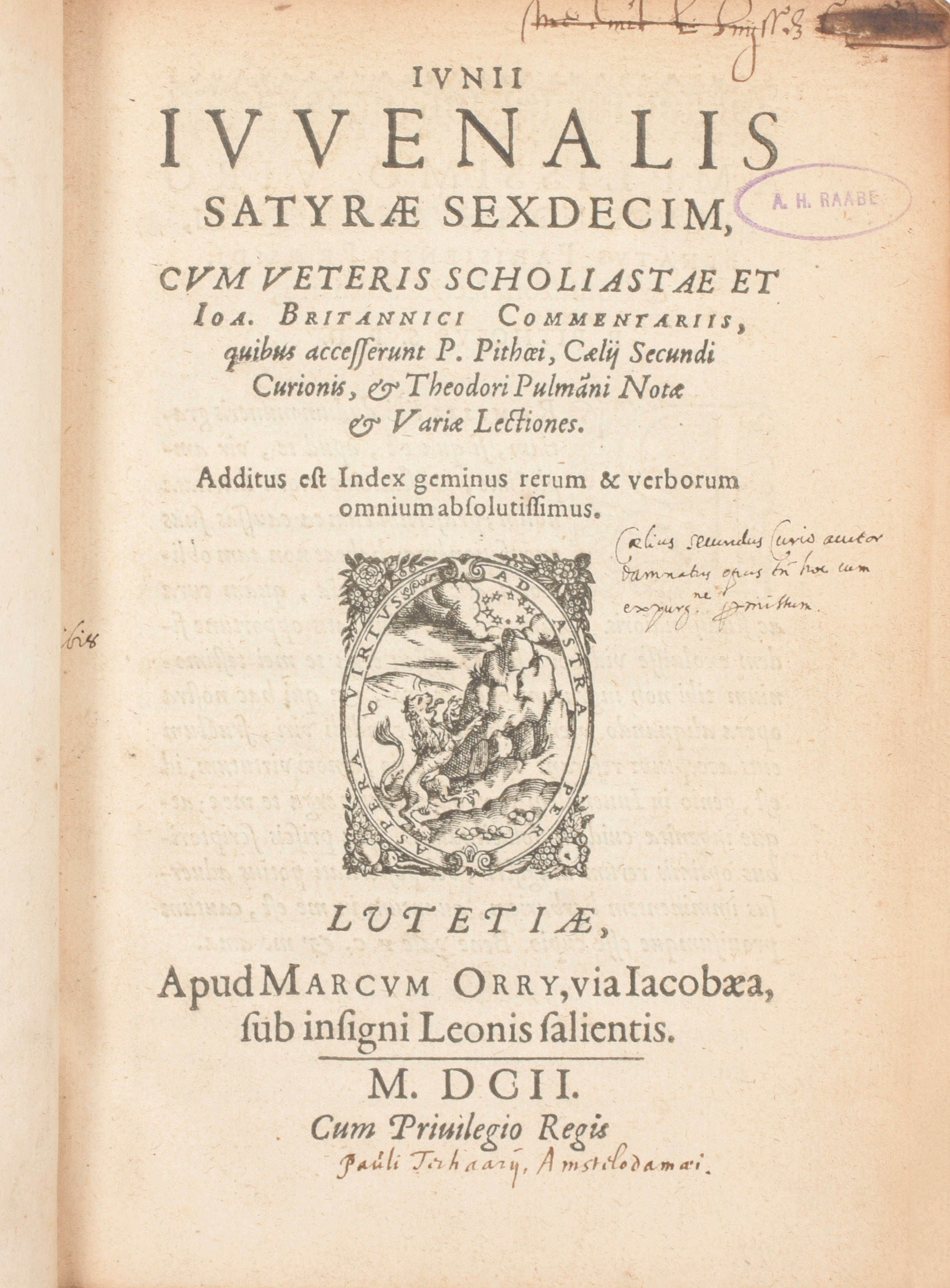
Satyrae sexdecim, cum veteris scholiastae et Joan. Britannici commentariis, quibus accesserunt P. Pithoei, Coelii Secundi Curionis et Theodori Pulmanni notae et variae lectiones. Additus est index geminus rerum & verborum omnium absolutissimus
Paris
Marc Orry, sub insigni Leonis salientis
1602
€200 - €300

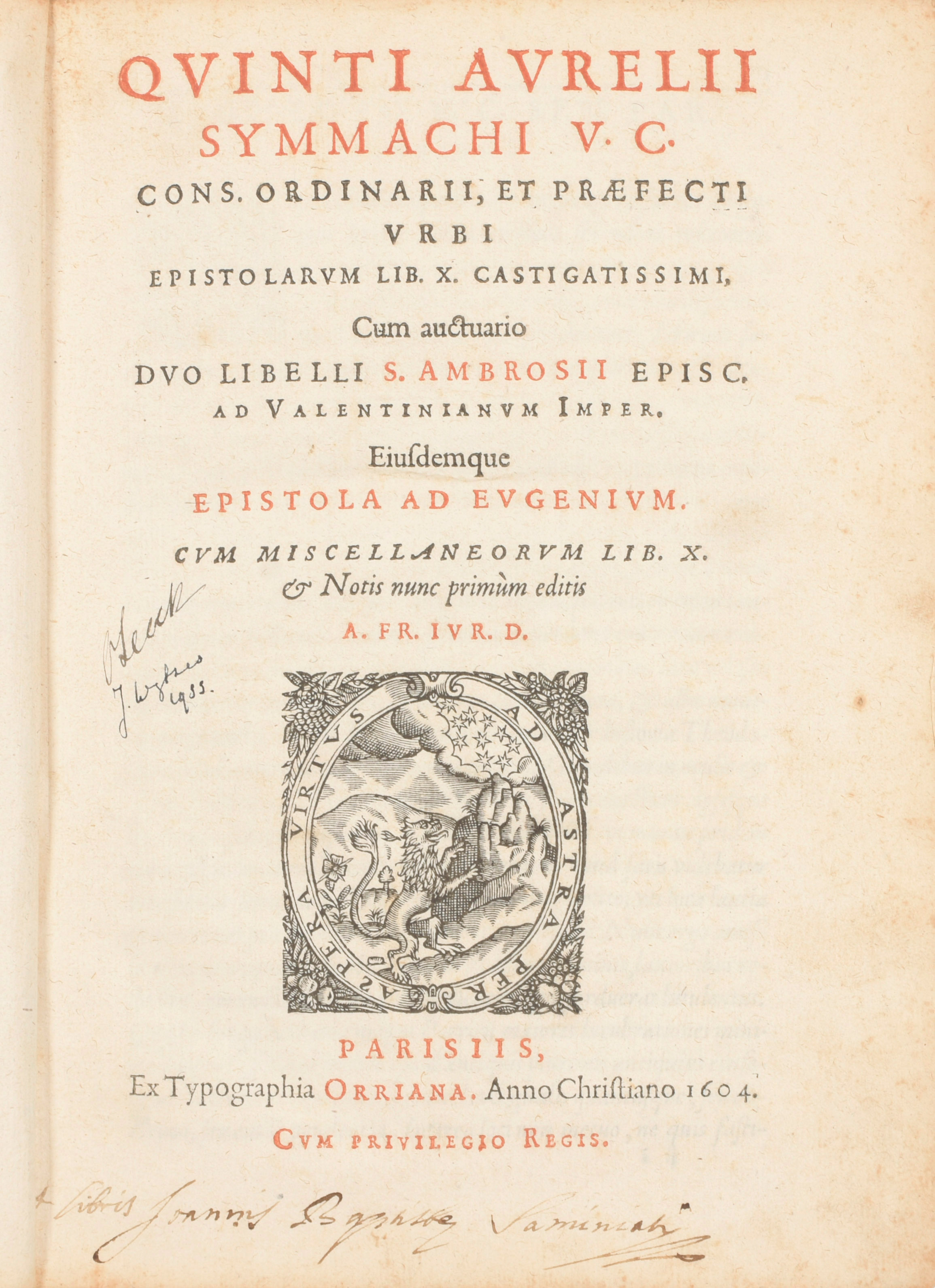
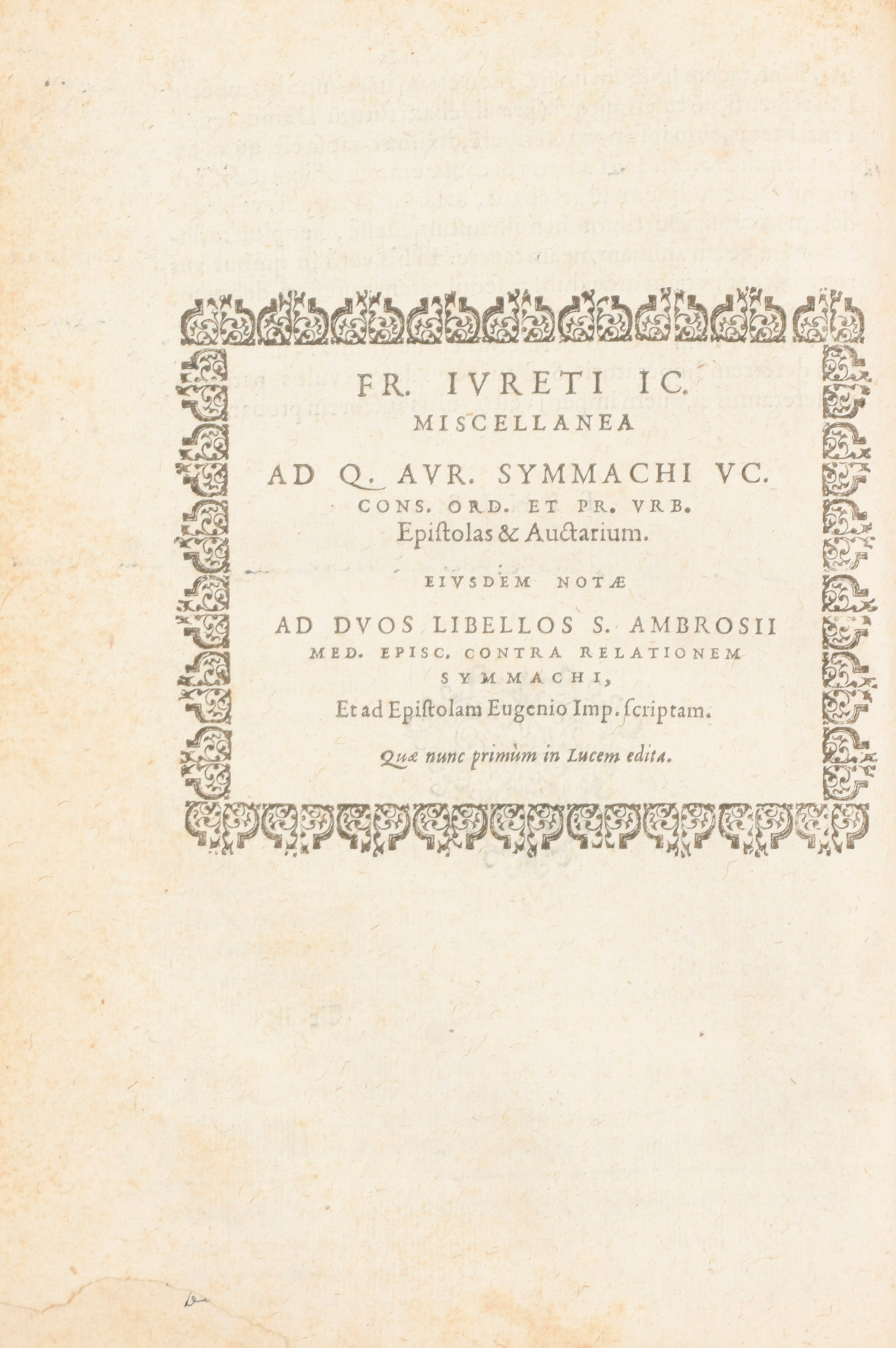
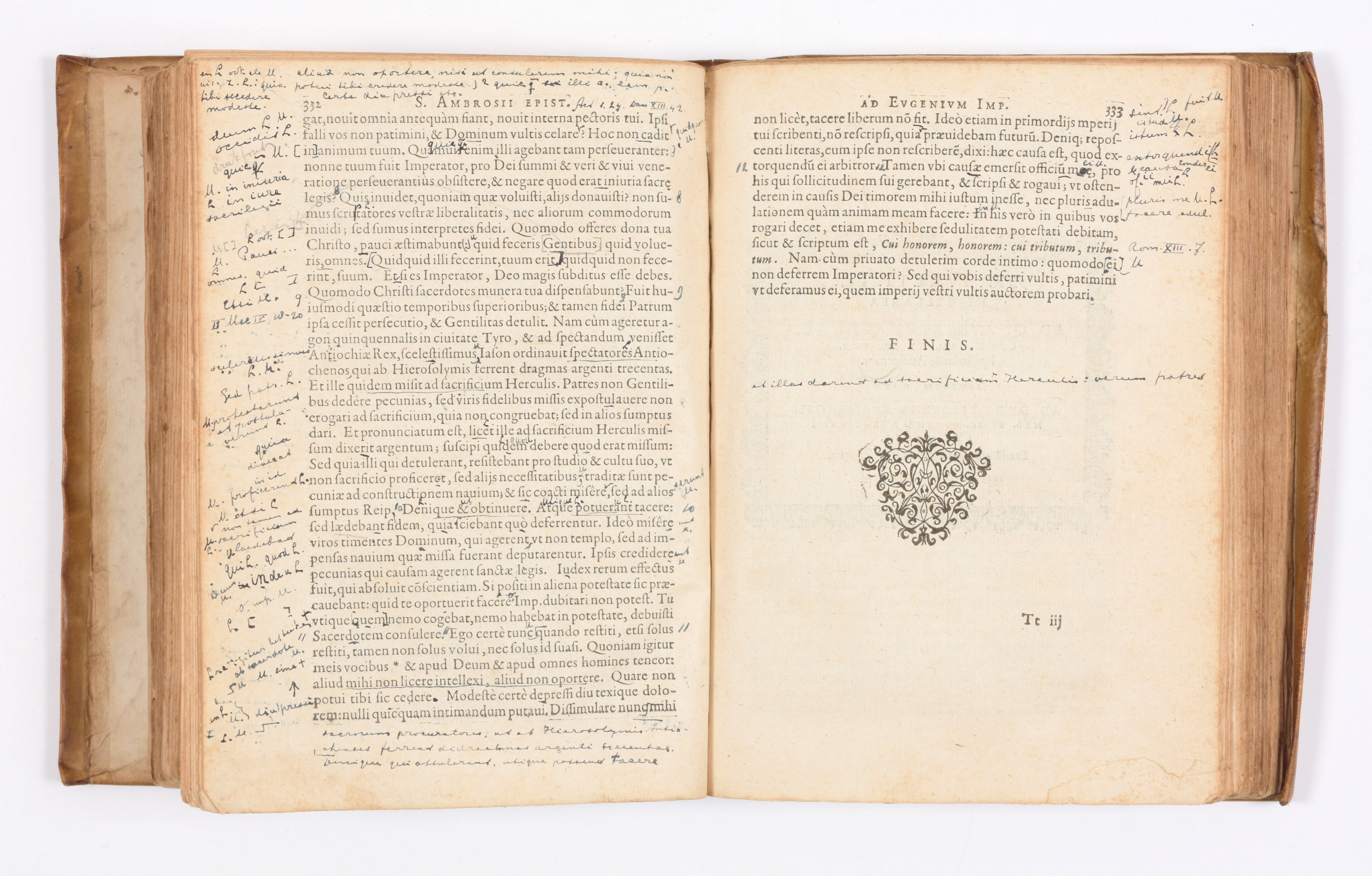
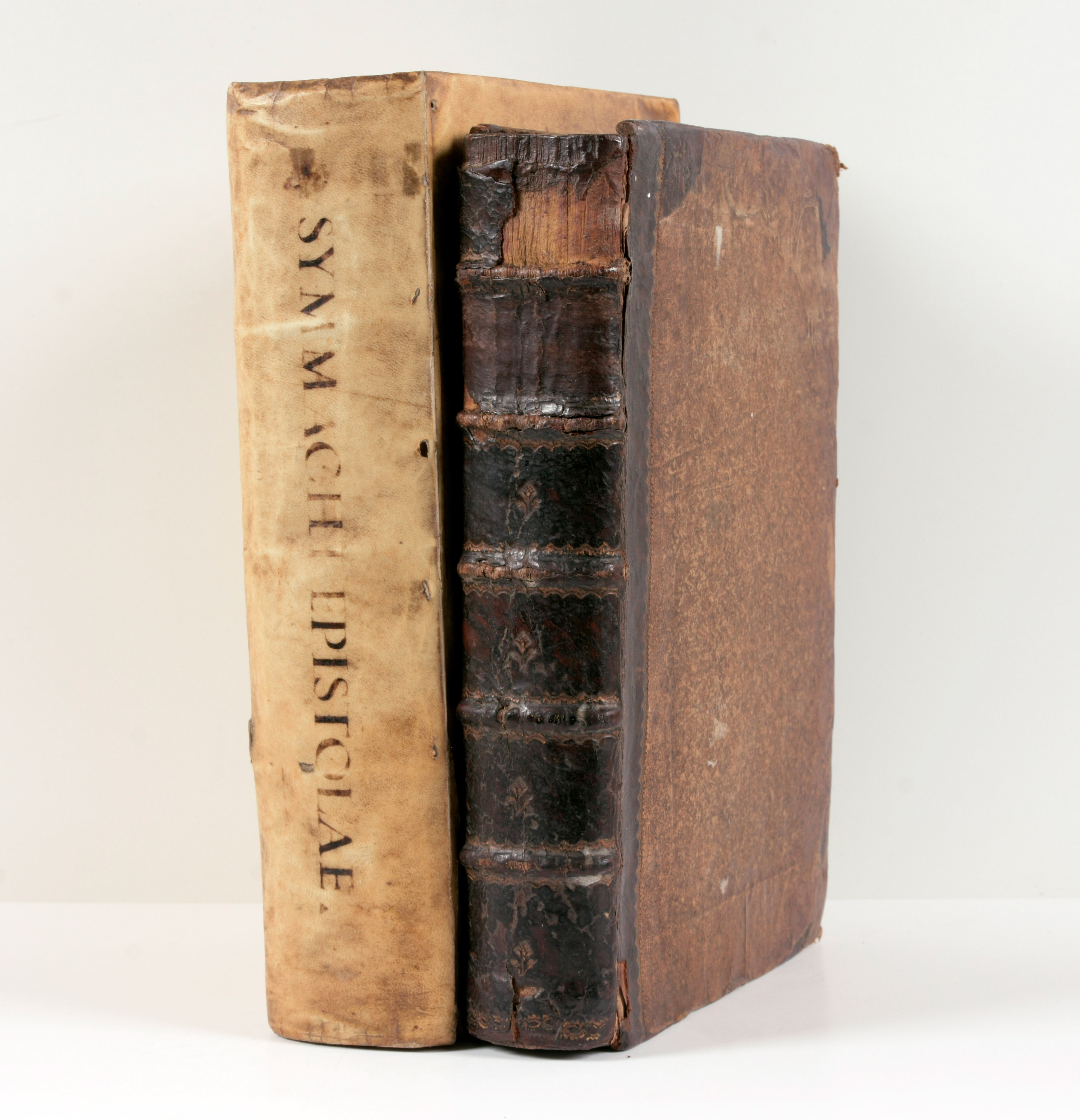
2 parts in 1 vol. in-4to, [xvi], 724, [2]; [96] pp, woodcut printer's device on title page, ms. ex libris on title page, small collector's stamp. Half leather binding, loss of leather at top of spine, blue edges with gilt stars. Manque à la BNF. We add: SYMMACHUS. Epistolarum Lib. X. castigatissimi, cum auctuario. Duo libelli S. Ambrosii episc. ad Valentinianum Imper. Eiusdemque epistola ad Eugenium. Ed. F. Juret. Paris, ex typographia Orriana, 1604. 2 parts in 1 vol. in-4to, xii, 334 + 334, [24 indices & 1 errata] pp, incomplete: lacking pp. 49-56 of part 1, title printed in red and black, woodcut printer's mark with device : 'ad astra per aspera virtus'. Numerous marginal annotations at the end of part 1. Binding in full vellum, title in ink on spine, first hinge loose

Ex libris Caroli Zeerleder. ""Symmachus sought to preserve the ancient religion of Rome at a time when the senatorial aristocracy was converting to Christianity. [...] In other letters, Symmachus describes preparations for his shows in the arena. He managed to procure antelopes, gazelles, leopards, lions, bears, bear-cubs, and even some crocodiles. Symmachus also purchased Saxon slaves to fight and die in the games. He was annoyed when 29 of the Saxons strangled each other in their cells on the night before their final scheduled appearance"" (Wikipedia)
Ref. Schweiger II/991 ; Brunet V/612: ""Édition meilleure et plus riche en notes que celle que le même Juret avait déjà donnée à Paris, en 1580"" (together: 2)