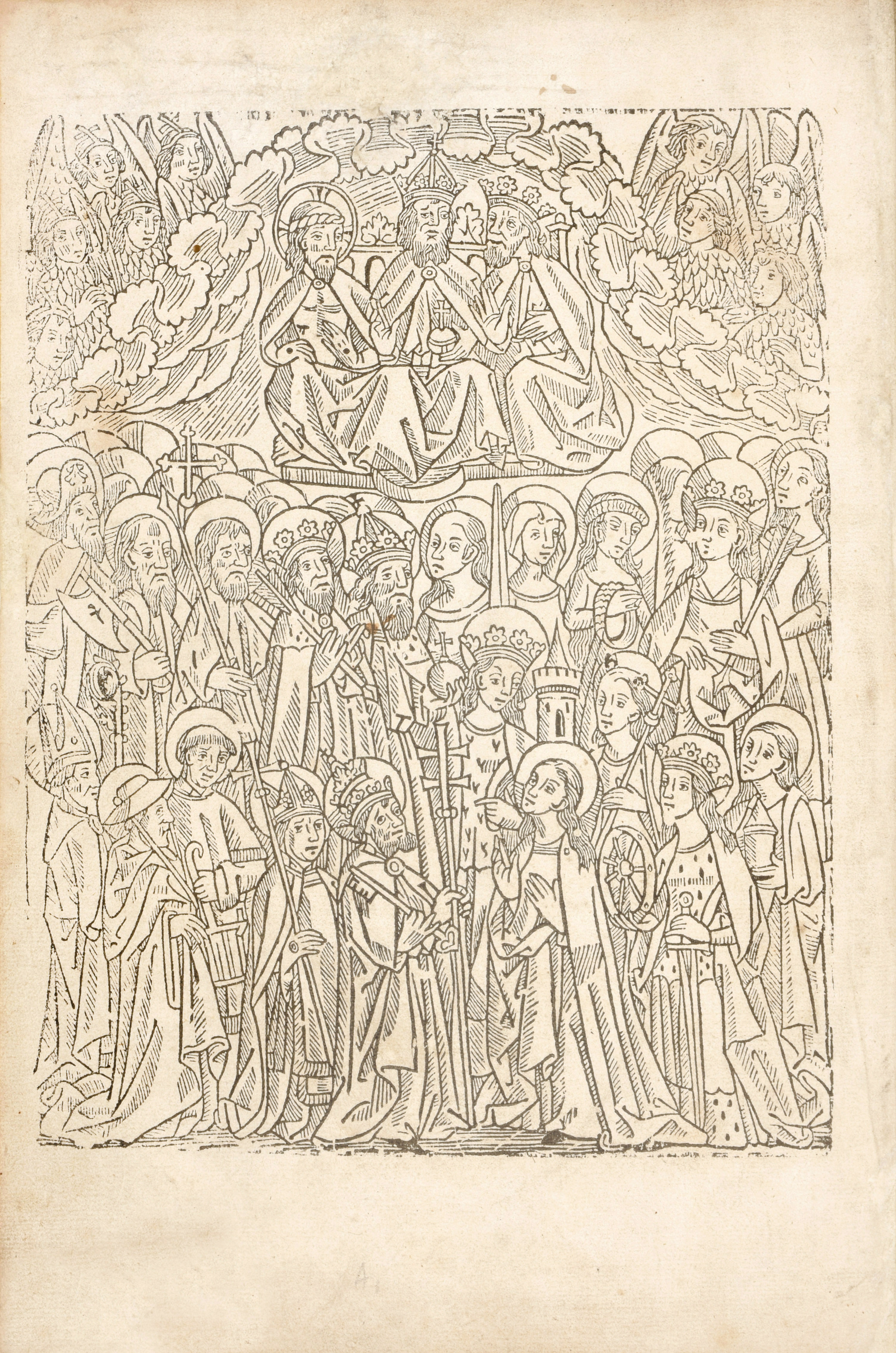
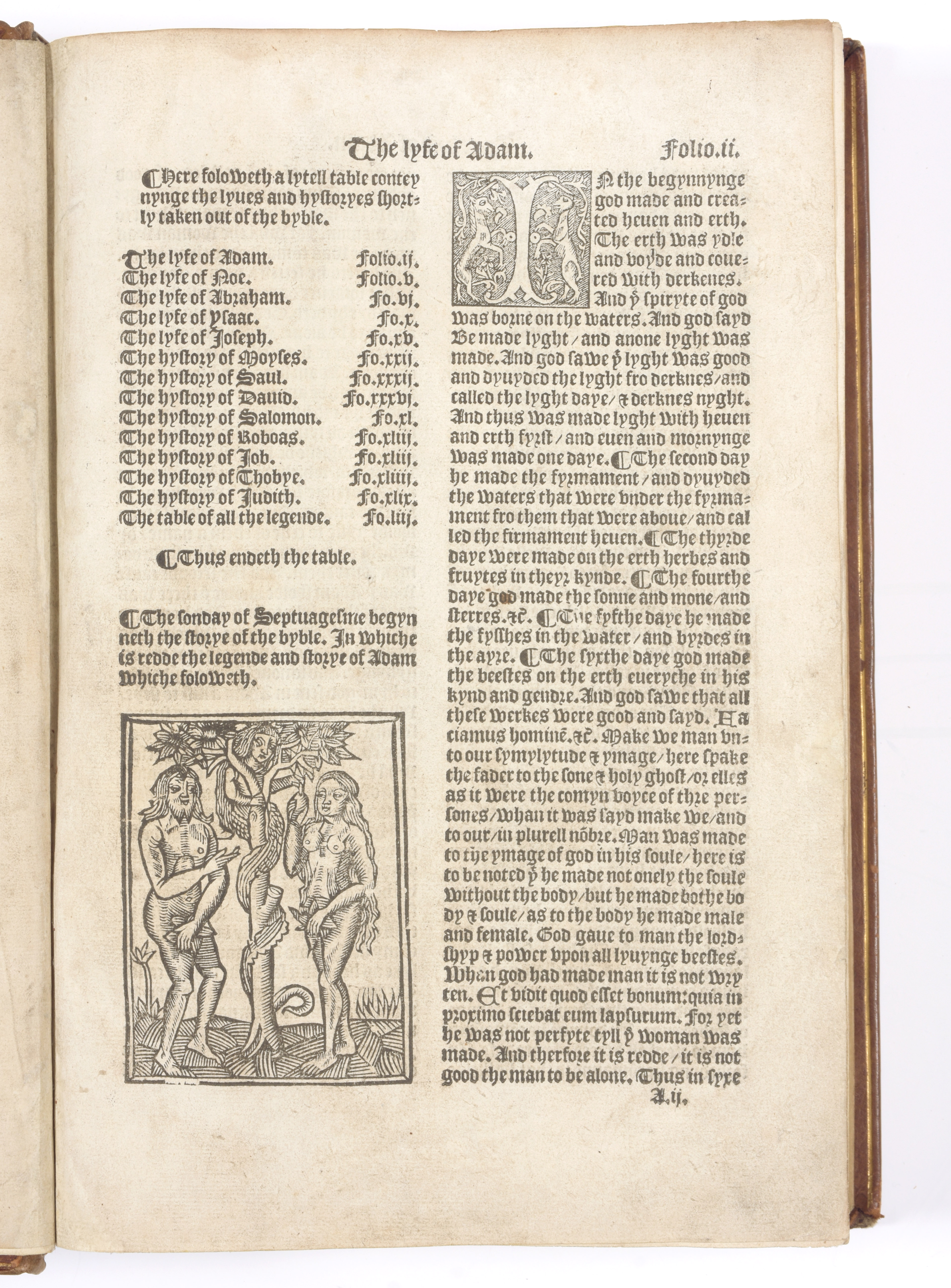
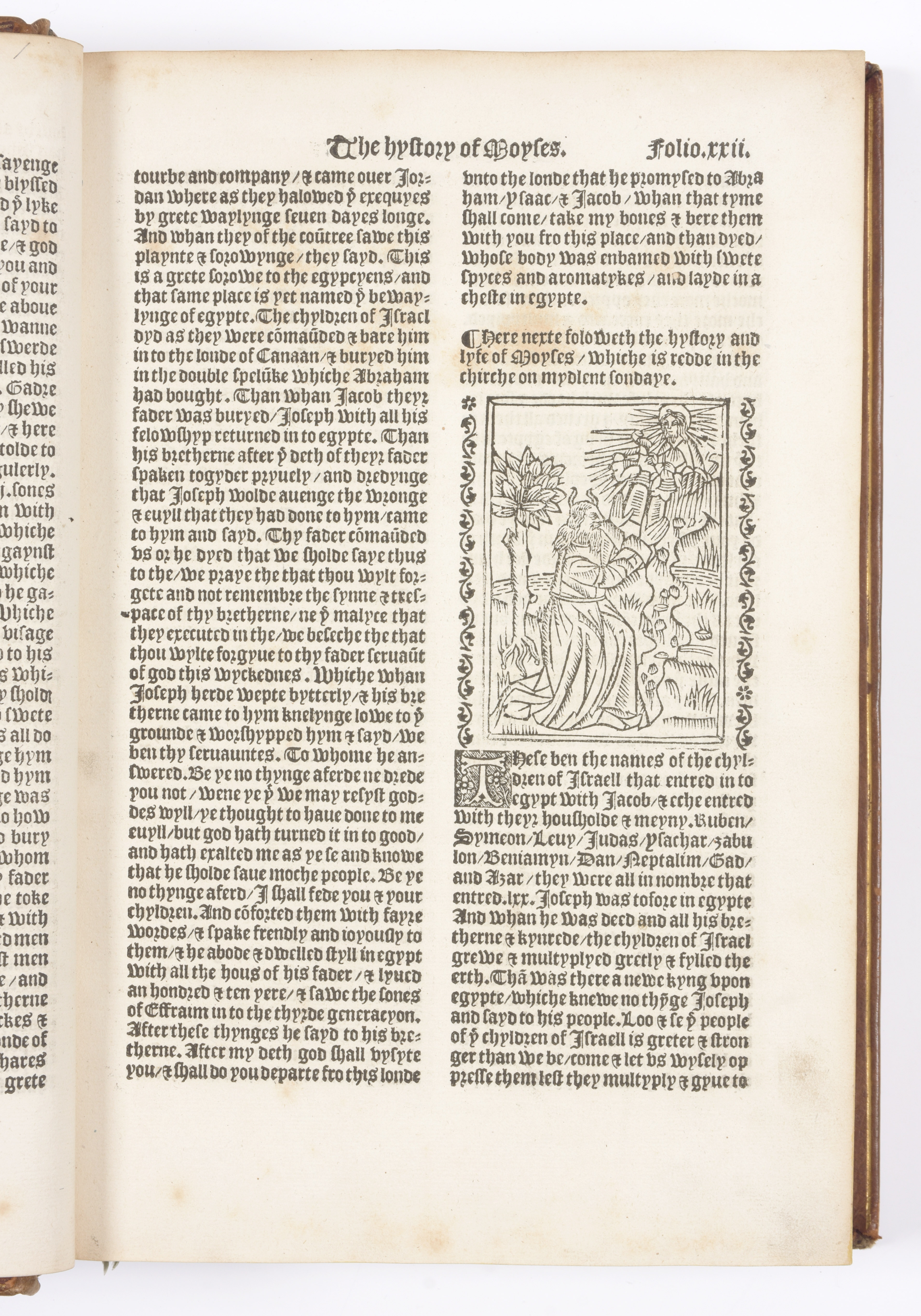
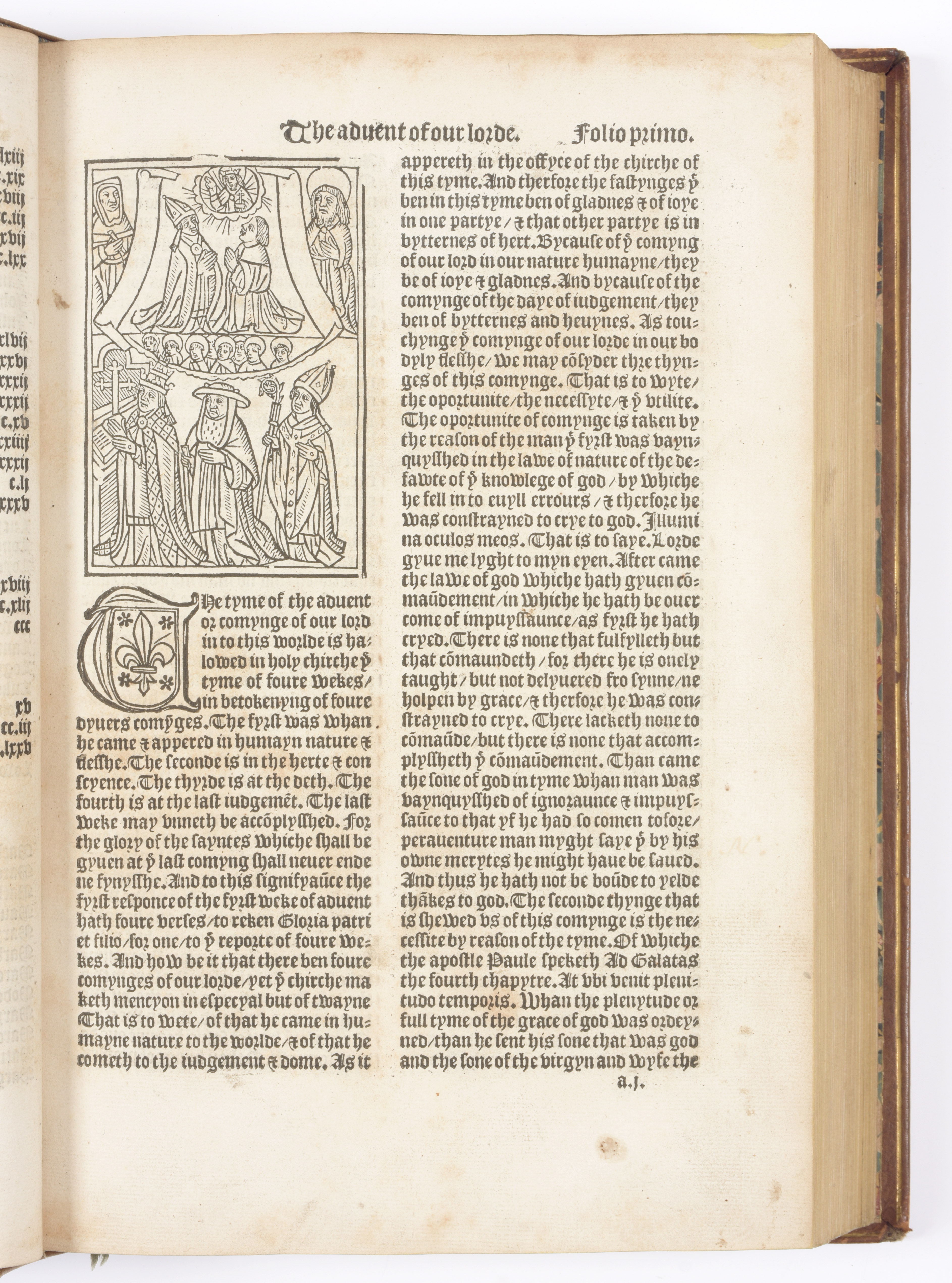
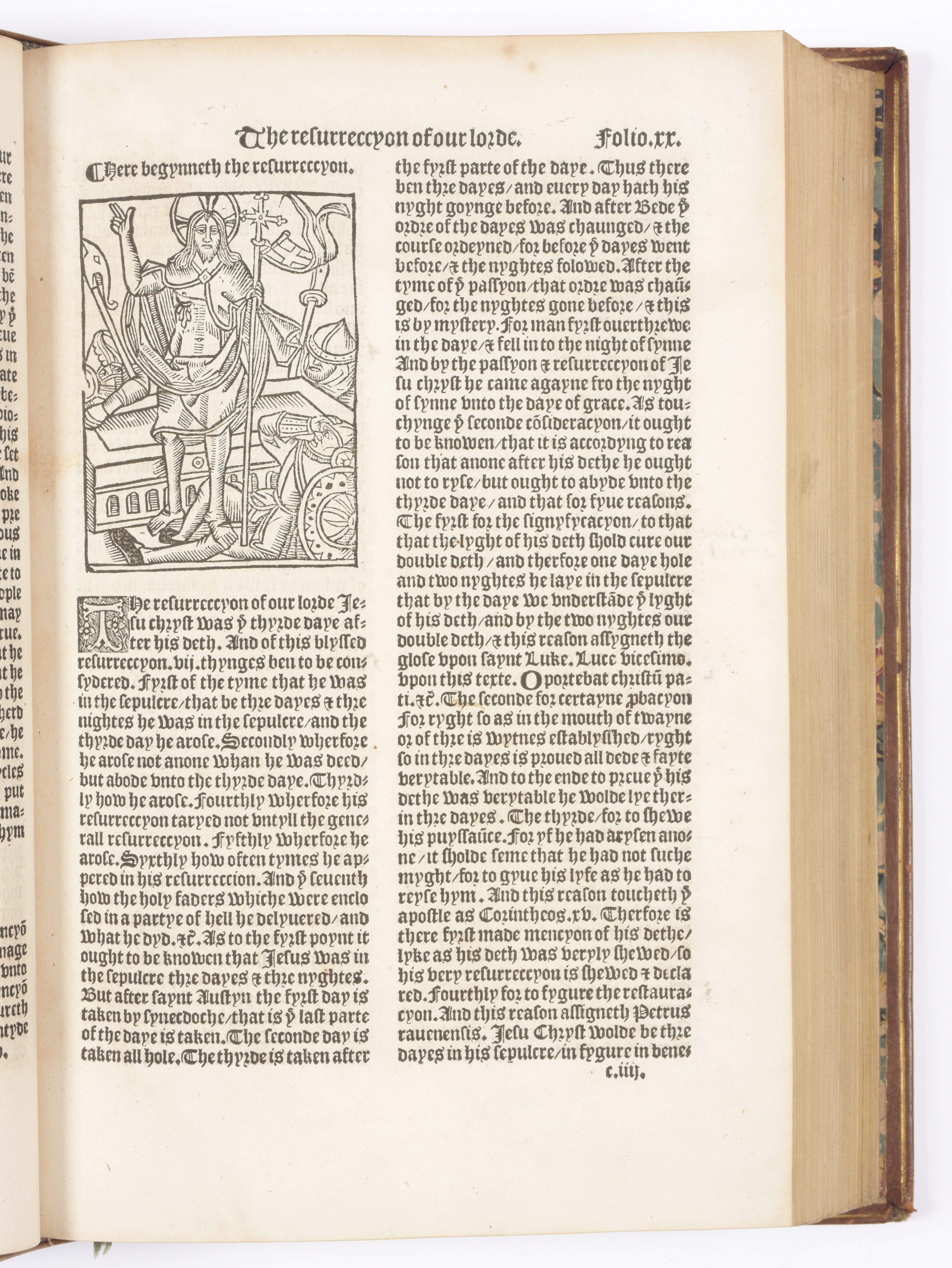
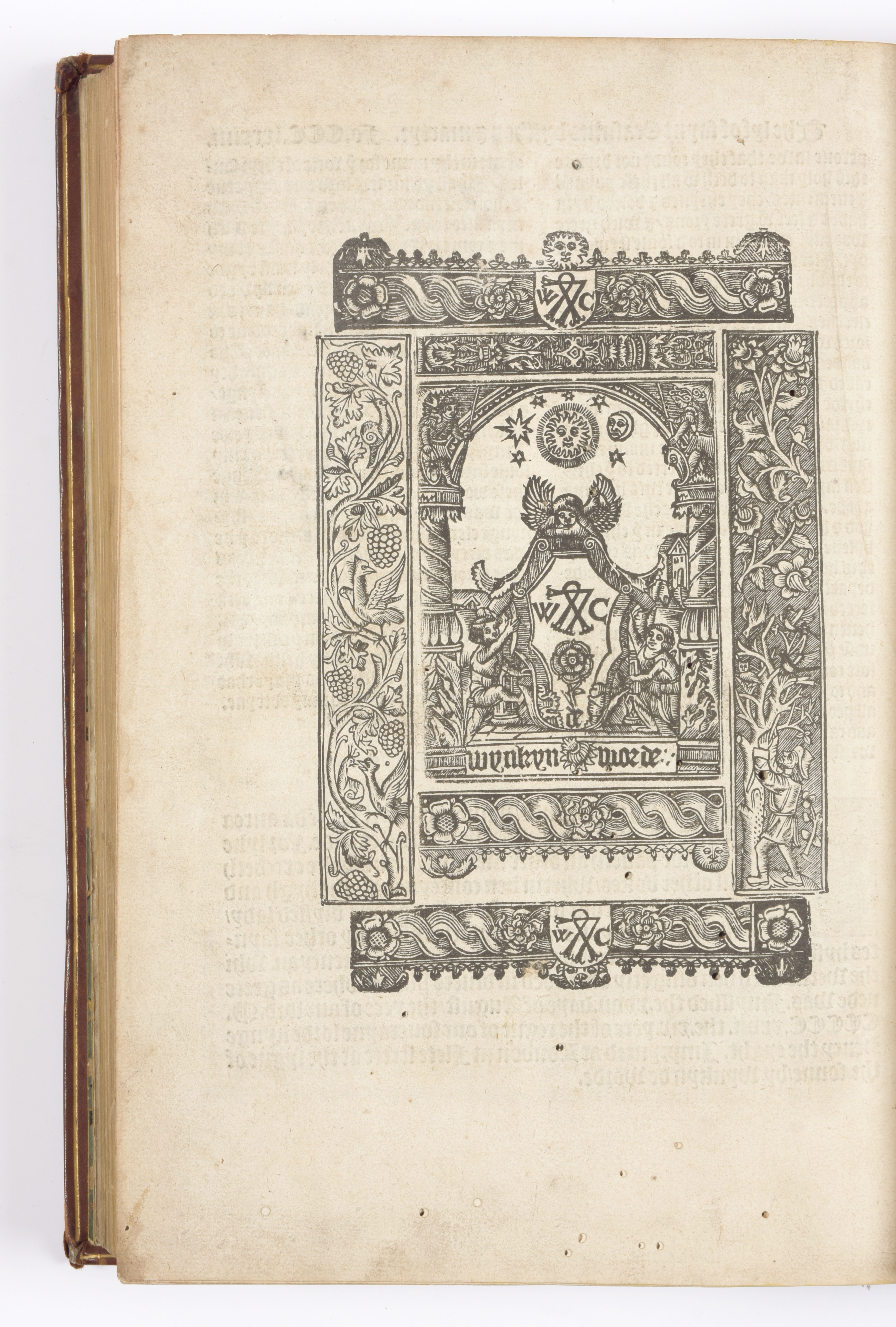
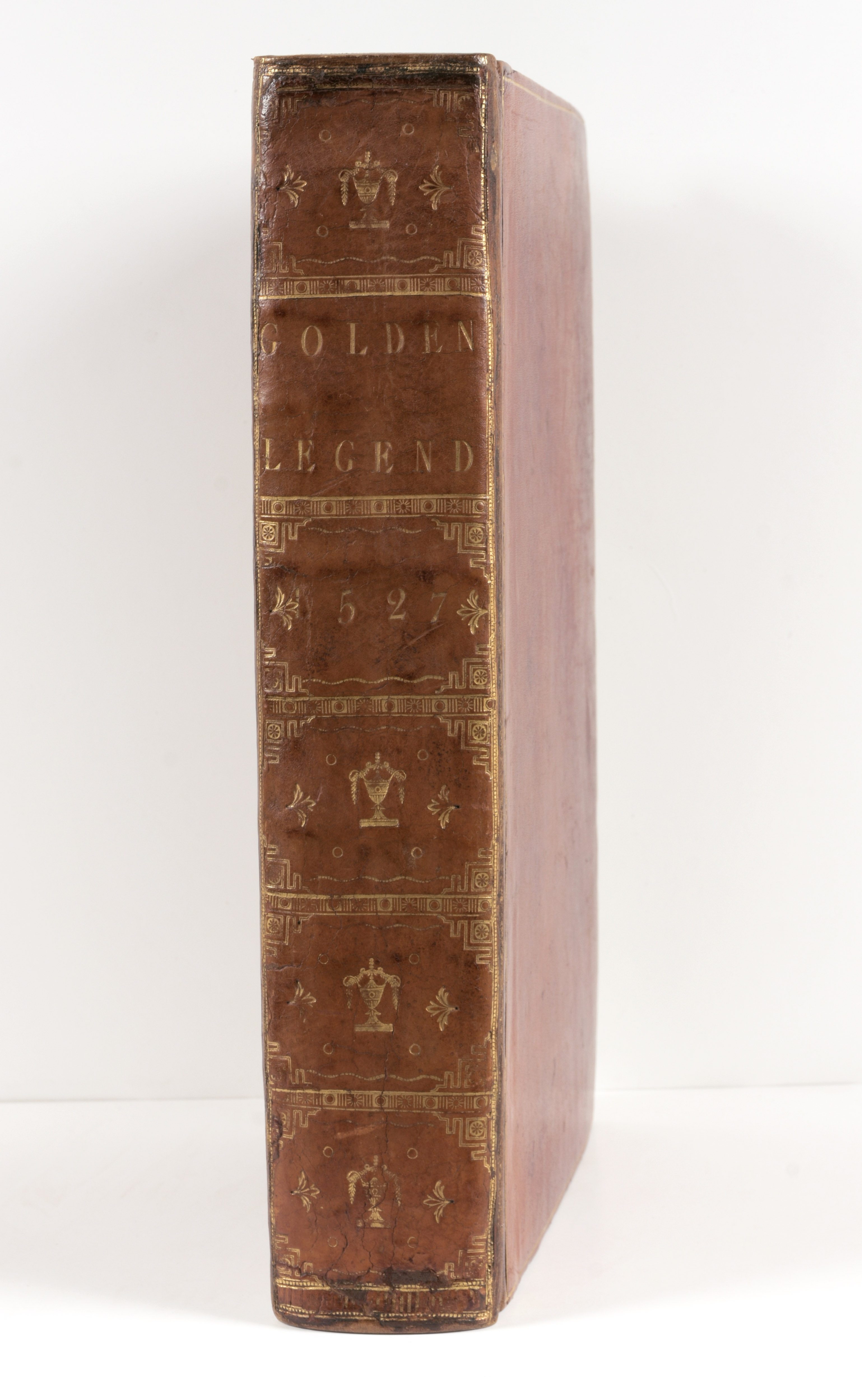
Folio, liiii(=54] - CCCLxxxiiii [=384] ff. Printed in gothic type (black letter), in 2 cols of 46 ll. FULL-PAGE WOODCUT (on A1: an assembly of saints and martyrs) and 85 WOODCUTS IN THE TEXT. LARGE WOODCUT MARK AT THE END. (occasional minor toning, single wormhole in 1st ff., some wormholes towards the end affecting some letters, blank bottom margin of f.128 and corner of f.316 repaired, sm. tears in blank top margin of f.237). 18th-c gilt russia, covers with gilt ruled border frame, gilt decorated flat spin with morocco label, gilt sides, yellow edges, marbled endpapers, blue silk marker (joints neatly repaired). Preserved in a quarter red morocco and buckram chemise within a matching cloth slipcase. A fine genuine complete copy
"The Golden Legend was the largest and most elaborate production of the first printer in English, William CAXTON. It is an English translation of Jacobus de Voragine's Legenda aurea (ca. 1267), a collection of legends for the feasts of saints (the Sanctorale) and other major days of the liturgical year (the Temporale). The legenda aurea was one of the most popular and influential books in the later medieval Western world; it circulated widely, and was repeatedly translated into many vernacular languages. Caxton based his translation on the French version of Jean de Vignay, but he also used the Latin original and a previous English translation, the Gilte Legende, with some personal additions. In reworking the text, Caxton omitted some saints found in Voragine's original, but also added many extra stories (many of them English or Irish) from manuscript sources. His version is unique in its sequence of Old Testament lives from Adam tot Judith; in fact, his section of his text is little more than a transcription of the Bible, circumventing then current laws that prevented the publication of the Bible in English. Caxton's successor Wynkyn de Worde first printed the work in 1493, at first omitting the stories from the Bible, and then complete in 1498, 1507, 1521 and 1527. After the English Reformation, no further edition was published in England until William Morris. Ref.: ESTC S111988 - STC2 24880 Prov.: Old armorial bookplate 'Geo. Arnold Esq., One of the Gentlemen of his Majesty's Most Honotable Privy Chamber' (i.e. G. Arnold of Ashby Lodge and Mirables, 1753-1806). Pencil collation and notes on front flyleaf"